
remembering the life and words of Andrea Gibson
July 27, 2025
It’s become commonplace to hear and then subsequently use words saturated with violence. Yet this vernacular can change. It consciously must change. The war on drugs, the war on cancer, or the war on crime. As if it's something to fight, to conquer, to over-power, to destroy rather than understand. There is an aggression, fear mixed with hatred, sewn into the fabric of these words. Even health, our relationship with food, to sports commentary—it’s one battle after another and it’s void of consciousness. What’s your greatest weapon? I grow fatigued at the thought of this. All I long for is love.
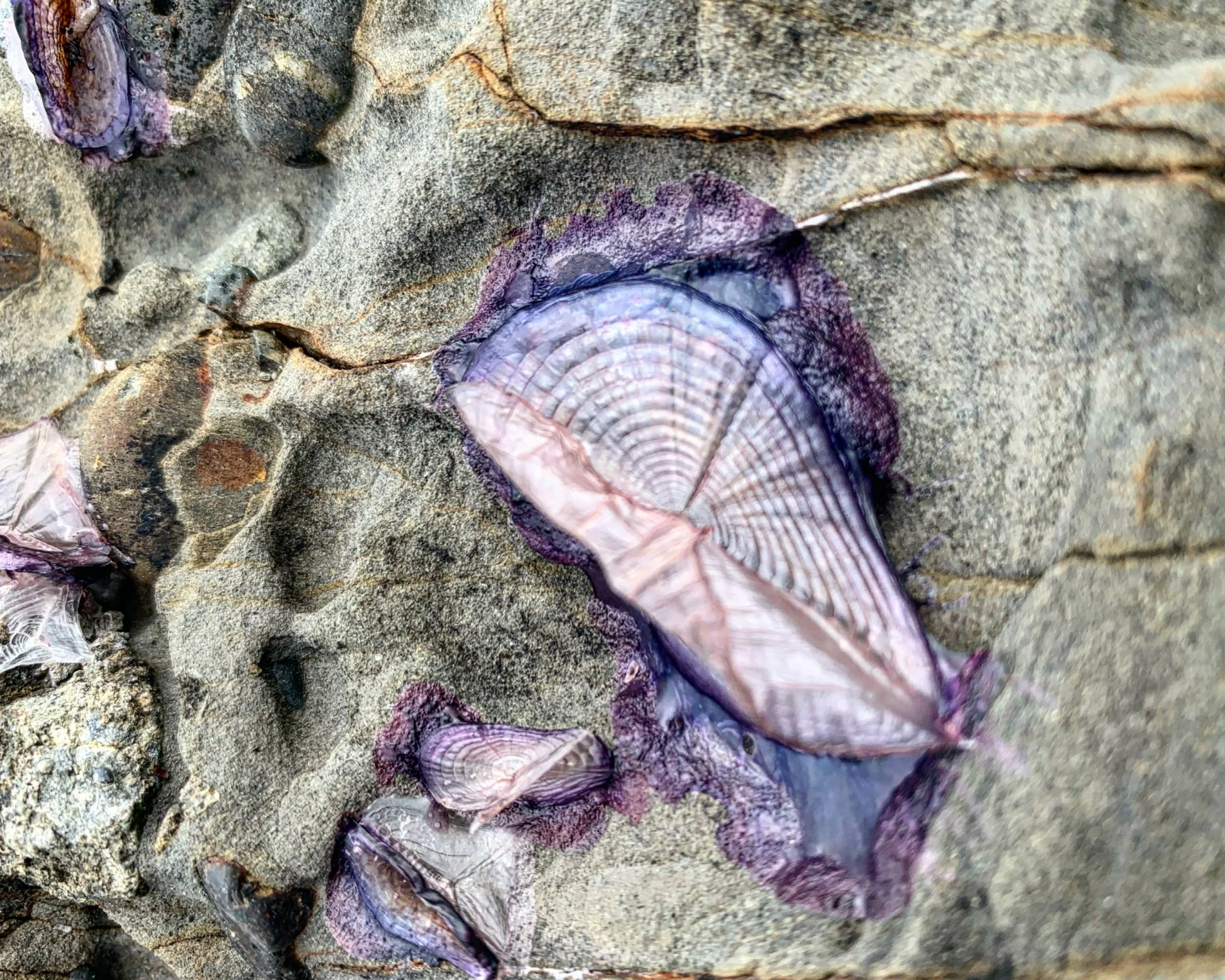
photo© erin johnson the moored remains of dehydrated jellyfish
This does not negate the intensity, the trauma, or the fear that can surface during these time. More so it’s posing the question: how can language’s attempt to translate the subjective limitlessness of life and death be done with honesty and reverence? Because words, like plants, are liable to self-seed and proliferate—they are to be held and shaped with intention, each waiting to settle in place. I remind myself, and ask you dear reader the same, to be mindful of the words I choose. Do the ones left unvoiced in my mind, the ones spoken, or the ones written, restrict and constrain? How can I, instead, wrap them up in grace so that they may emanate from love and slowly emerge?
The poet, Andrea Gibson, whose words and stories have touched me deeply, recently passed away. July 14th marked the end of an amazing life, the last 4 years of which were transformed due to ovarian cancer. Their life is why love is on my mind and in my heart today. And why I’m softening ever so slightly so that I may be moved by all that is Good.
I was introduced to Andrea Gibson over a year ago via my dear friend Liz as well as the comedian Tig Notaro who’d mentioned their poetry on her podcast Handsome. Last September I shared one of their poems in a satirical essay: ode to joy. The poem is potent, and just as real and raw today as it was then. What is it that Francis Weller said? We can only experience the fullness of life’s joy if we equally submerge ourselves in its grief. When I drop into my heart to feel love I think of their words, measured and set against silence…specific to those with a working knowledge of abundance.
I won’t sugarcoat the fact that they desperately wanted more time on this planet that they loved so much. This planet of squirrels and romance and basketball and moonlight.
But the time they had was significant, prismatic, and wild. It was full of trampolines and mountain ranges, stage lights and pants-peeing laughter. In their words, they “juiced the sun for every holy drop.” One of the last things they said before dying was, “I fucking loved my life.” Their conviction stunned the room.
(from The Poem Isn’t Over by Meg, Andrea’s wife)
Poetry as prayer.
Prayer as an ode to rhythm.
Rhythm as an observable relationship with truth.
If a poem can crack me open, revealing a lane towards love, may these poems be my prayer.
I thank you light, for the subtle way
your merest touch gives shape
to such things I could
only learn to love
through your delicate instruction
~ excerpt from Blessing for the Light by David Whyte
/
Melt in love’s kind light
Find union in surrender
Enter our ONE heart
~ a haiku shared by my friend and artist Mara Berendt Friedman
/
In love, I am
Delighting in this flicker of ray and shadow
May the part who furiously judges, soften. And from these aging hands
love reveals itself in myriad and mystery.
~ words swirling in my mind
/
We die with the dying
see, they depart and we go with them
We are born with the dead
see, they return and bring us with them
~ T. S. Eliot
Yours, Erin