
November 22, 2026
For three years I lived with my, at the time, partner in a rustic cabin in the Oregon woods by the Siuslaw River. By rustic I’m talking small, maybe 500 square feet with an outdoor shower adjacent to the front door, an outhouse for pooping and peeing, a little wood burning stove for heat, and a rickety loft accessible by ladder with enough space for our futon and a chest of clothes. It stood, clad in cedar shingles, down a path from a large meadow. It had the most spectacular view of the mountain side with an explosion of acers and doug firs, trails to magical untouched groves, and a nearby stream for summer bathing and play. As simple and pioneering as it was coming home after a long trip wasn’t necessarily welcoming. The cabin was very dark, typically freezing, (especially in the winter), with the only signs of life being our two disgruntled cats waiting under the porch.
Most often returning home requires the following to be addressed: temperature, stuffiness (you know when a space not only smells but feels a little musty or stagnant), the toilet, hunger and thirst. The first thing after closing the door and dropping the bags was splitting wood to start a fire. In thirty minutes the sharp edges of the siding would begin to soften—the cold surfaces, our bodies, and ultimately the arduous day of travel slowly melting away. After the fire was stoked and crackling our attention could and would shift. How are the cats? Will you put the kettle on? Do we have any food we can whip up? The answers: they’re okay, yes, and YES.
Living in a small cabin in the woods taught me a lot. In no particular order, you stock up—having pasta, mason jars of jam or soup sealed and ready, cans of artichoke hearts, a bottle of wine, tins of sardines, or something in the freezer to thaw comes in handy. Animals are super tough. Prepare things before you leave, like tidying up or refilling propane. Have someone you trust look after your place. Even though you know your neighbors and look after one another. Grow a garden to know there will always be vegetables.
I watched my parents always clean the house before we went on vacation as a kid. In retrospect I get it completely. I do the same, not only because it was modeled in my formative years, obviously, but it makes a big difference coming home to some semblance of cleanliness. It certainly makes the transition easier to bear.
Still, in the days that followed we’d often have to make the 40 minute drive back into town for supplies. I love to travel but the multiple flights, the drive, etc. are often more exhausting than they are glamorous. The actual ‘day of travel’ can be a doozy. Most coming homes are coupled with little energy or initiative. I generally just want to settle in but will rally with the aforementioned sundries to have a hot plate of pasta.
This was my experience over twenty years ago, and while a lot has changed in where and how I live, the desire to have a soft transition or smooth homecoming remains the same. Wouldn’t it be lovely to have a coming home concierge? Say if there wasn’t pasta, bread, scallions, or sardines I could call on someone, to help me fill the gap.
Uplift, improve, and improvise—when leaving a trace is nice

I was recently house sitting for a friend so all of this is top of mind. I figured I could use the time like a personal writer's retreat—hoping that in 2 ½ weeks I’d figure everything out regarding work/life. I’d produce several essays and map out next year‘s publication schedule. Big dreams, high hopes. In writing this down, I acknowledge my audacity. A tall order and a little ridiculous. None of that happened. Instead I surrendered to thinking, walking, reading, cooking, and spending ample time with other dear friends who live there. If I’m being honest all of that was more in line with the medicine I needed. What the time had in store. I did write. I did read. I spend a lot of time with animals—the cats, watching turtles swim in the waves, the neighborhood donkeys, the unique birdsong that I don’t hear in Albuquerque, the throngs of chickens. It was life, living praxis.
I’m deeply connected and fond of my home and I noticed the energetic ropes of worry when away. They are far more than the spaces we inhabit. They have a spirit, an energy, and a life force all their own. Homes go to sleep to a certain extent when the people they embrace are absent. And in turn wake up revitalized upon their return. When I get back from a long trip I’m relieved. I see my home in a new light. I’m appreciative. I also notice the time it takes for the house to wake back up. Remember and thaw to the warmth of a shared life. Moving from room to room, cooking the next meal, a load of laundry, an open window.
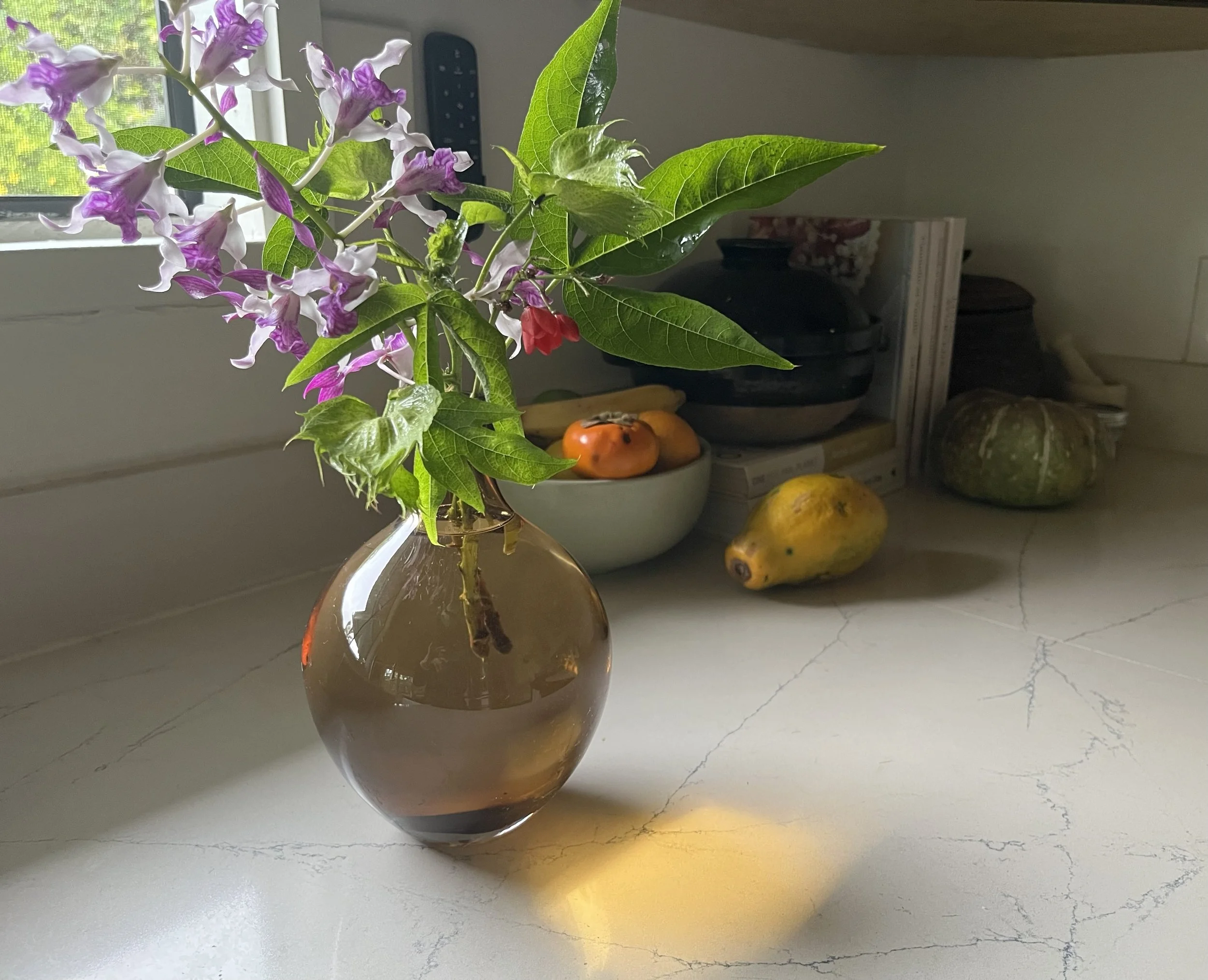
She and her husband as well as I would inevitably be experiencing a version of coming home. After 10+ hours en route for me, 20+ hours for them, we’d no doubt share a sense of disorientation and sleep deprivation. I imagined a very simple yet thorough offering; a few things, contextual and situationally dependent. Wouldn’t a container of homemade soup left in the fridge, a bouquet of flowers on the table, perhaps cookies in the cabinet, garbage and recycling taken care of sound fabulous after hurdling through multiple time zones? Imagine arriving with a sore ass and back to find that, it’s all good. I don’t have to do anything, at least not right now. Who doesn’t want to return and feel at peace? To figuratively and emotionally land?
I may not have written the seven essays I’d intended too but I did remember the importance of taking good care of place and time. What emerged was connection with the land, my good friends, new friends, animals, neighbors, the rains and sea. My relationships deepened.
Leave no trace is a primary tenant when camping in the wilderness. Leave nothing behind, ideally you’ve left it better than you found it. Yet when it comes to the landscape of homecoming, I kind of like to imagine the opposite. That we do in fact leave something behind. A happy ghost. A good vibe. A love that can be traced somehow, somewhere in the surroundings.
As an individual regularly negotiating the nature and status of her business, I’m asking what problem do I solve? How do I improve the lives of the people who work with me? My relentless impatience or ineptness of being able to clearly define what it is is, at times, maddening. I find it challenging to articulate. But maybe it’s not nebulous. Maybe it’s so simple it’s borderline boring. I landed on this (pun intended): With my help I uplift the hearts and minds of those who need it.
I help polish words through editing. I help see the big picture and in contrast the minutia for system organization. I provide guidance with gardening, floral arranging, even paint color, tile, or furniture placement to reduce decision fatigue. Within the context of Ayurveda, its seasonal lifestyle practices, homing, and spiritual processes. The red thread or through line is sharing the tools, often already at your disposal, so you can comfortably and easily return home.
Yours, Erin