
Seed sovereignty—the heat is rising
March 29, 2026
As an earth family, all species have freedom
Seed sovereignty.
Of the few things I get fired up about, this is one of them.
Our seeds must be honored, harvested, saved, shared, and planted. And after one cycle ends another one must continue.
The problem, as I see it, is as impatience and the illusion of convenience balloon the awareness and reverence of the seed decline. If there’s any sort of origin story, this is it. It starts with seed knowledge and cannot be ignored, remain hidden, or be the byproduct of our own ignorance.
The absence of a life cycle
I can’t recall whether it was through coercion or opportunism that farmers in India were incentivized to buy Monsanto’s engineered seed. But whatever the reason, it was not in favor of the farmer, the health of the soil, the vitality of the community, or the sovereignty of the ecosystem. Small farmers ended up dependent on buying seed rather than collecting what was naturally given. The plant had been tampered with to the extent that it would no longer produce viable seed with which it could reproduce. In short, there was no seed to save. In addition to this already horrible plan, growth relied upon a poisonous recipe of chemical fertilizers and insecticides.
However this is not growth. More like greed. Restrictive standardization is a kind of intelligence nature does not share. With GMO (genetically modified organism) seed, one is breeding a tomato to withstand disease, to be prematurely plucked, and to tolerate global distribution. To say that this is a catastrophe of control and a disregard for health is an understatement.
“Everyone is panicking, but all you have to do is turn to the seed to learn how to address these mega problems: self organization—becoming part of a living and generous Earth—and learning the economy of abundance rather than subscribing to the economics of scarcity.
How has the economics of scarcity been manufactured? It’s been manufactured by defining extraction as growth. Patents and intellectual property rights are created by pulling out the life of the seed through genetic mining—it’s an extractive industry. In effect, you’re basically saying the seed cannot become seed.” (Vandana Shiva*)
I discovered the power of the seed through the humble yet revolutionary work of Vandana Shiva over twenty eight years ago while at the University of Oregon .
At which time the blindfold I’d worn for years was ripped off. The world as I perceived it ended. And something else opened. It informed the present. What I mean is that I refuse to go on or believe that it’s in my best interest to remain disconnected—disconnected from nature’s inherent abundance and plant intelligence, as well as turn a blind eye to the extractive role of capitalism. From that point on I made the decision to be aware and actively participate in the life cycle of seeds. I chose to be changed.
Vandana Shiva, as eloquent and wise today as she was when I first read her books in the late 90s, holds the seed central to the health and abundance of our communities. So when the discussion of food doesn’t include Life itself, I bristle. At my best, I attempt to be a steward of her words, ‘the future of food depends on remembering that the web of life is a food web.’
“Respecting the freedom of the seed to renew and multiply. Our role is not as master and owner. Our role is as caretaker. That’s why the economy of care is the foundation of living economies of the future. The freedom of the seed and the freedom of the seed keeper are interconnected freedom—they’re not in competition with each other.” (Vandana Shiva*)
The seed which has regional resilience and memory inscribed deep within its DNA was left. Waiting. Imagine not being able to save the seed from your crops. Not only does it provide sustenance and nourishment in one season, but it provides for the next, and then some. From planting 1-3 flower seeds in the late spring I’d have enough at the season’s end to supply my entire neighborhood. In a couple years, a community would have the fuel to transform its landscape into a thriving flowering food forest. But alas. The knowledge remains in our pockets.
Give us this day our daily bread
Today, I consider myself a committed, avid seed-saver. I find it to be a spiritual practice, a prayer, a radical act of socialism, and a means to cultivate food crops, flowers, etc. To preserve and carry the seed is to support gifting and abundance and ecology and nourishment.
“When you eat, there is consciousness of how the food was grown. Did it regenerate biodiversity or did it destroy it? Poison-free eating becomes an obligation to protect the earth: Eating as an ecological act, eating as a spiritual act, eating as a recognition of the Dharma of life.
In Eastern cultures we’ve always seen eating as an act that embodies our relationship with the earth—if it is a conscious act.” (Vandana Shiva*)
Eating itself is an ecological act, dynamic and interleaved. In the final year of my studies to become an Ayurvedic Practitioner I’d counsel clients in the Student Clinic. I’d regularly suggest growing a little garden. This extended in the years following when in private practice. I felt that everyone could benefit from such a relationship, for somewhere along the line it had been severed. The ‘how’ took on many forms, but the objective was the same: tending to the needs of another life other than our own, particularly plant life. This could be a collection of house plants, lovingly tended and watched, a window box for herbs or flowers, or a swath of one’s backyard. The size was irrelevant. What was, was the relationship arc. To be able to witness, care for, and understand the variables which are required for a seed to grow, reach its zenith, and develop to in service of the next generation.
It required, not a pill to pop but something a little more involved—a lifestyle shift, a willingness to be patient, potential research or inquisitive conversations, and finally the participation in an experiment where one may see the benefits themselves.
The food we prepare and eat, daily, can be one of the most direct pathways to remember our relationship with nature and our humanity. It’s a tangible experiment. Even if you sit and eat your meal alone, you’re not without the company of plant medicine, animal medicine, and ancestral medicine. The energy and life force latent within the seed is present.
Immerse yourself
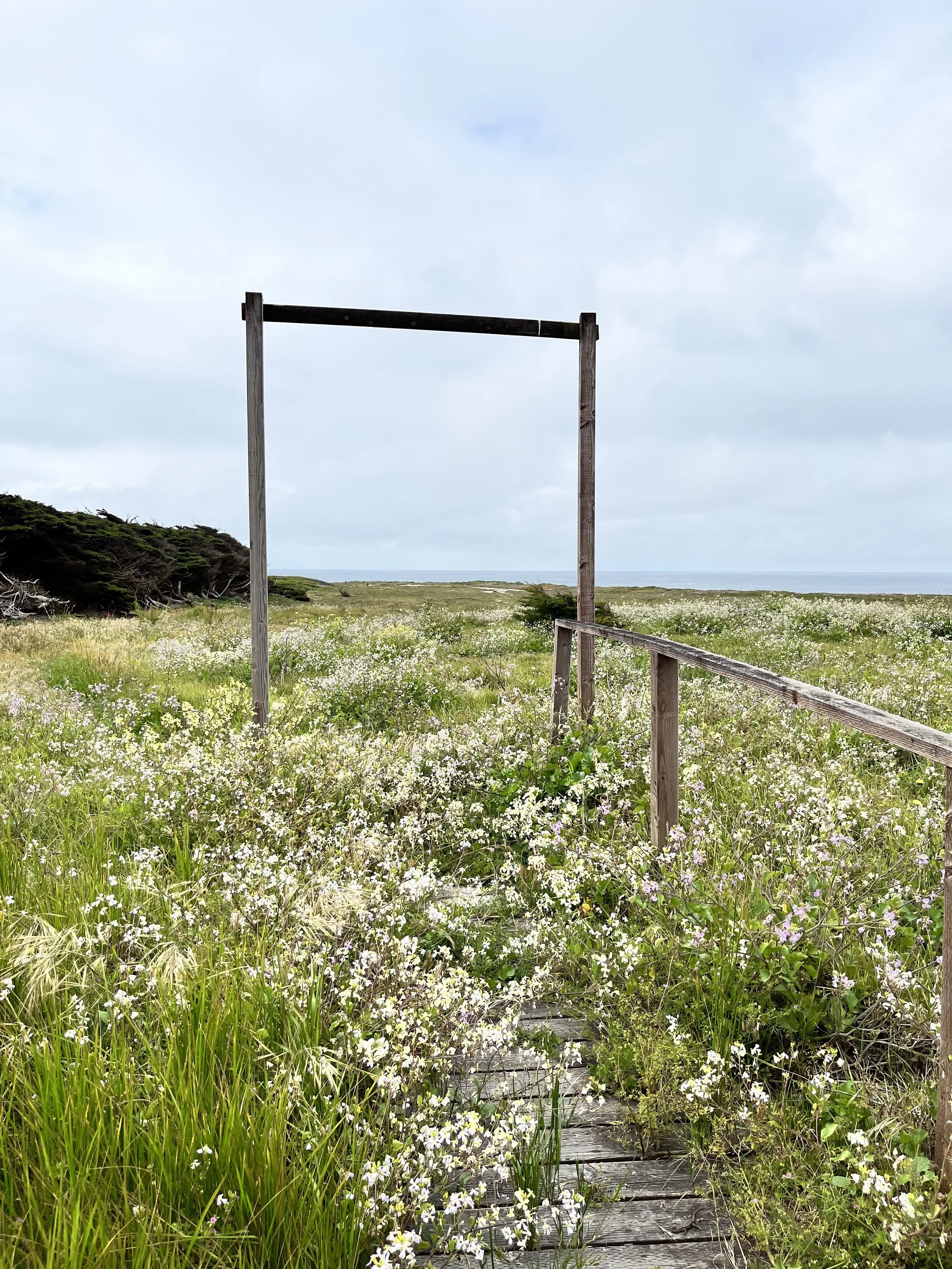
Later today, go outside. Take a walk even. Submerse yourself in nature as if you’re listening to music or swimming. (This is the beauty of swimming because there’s not much else you can do but swim.) The effect’s may be hard to describe. But my hope is that you were able to tune into the sensorial nature of the surroundings and caught its vibe. Maybe moved you, transported you even.
When immersed, being ‘on’ or paying attention with a kind of playful, heightened awareness is essential. Did you look up, down? What was in bloom? Where some plants swollen with seed? You don’t have to know exactly what you’re looking at, just look. And then look a little harder. Pick, crumble, investigate. Seeds come in all shapes and sizes. I’m forever bewildered by their secret growing.
This may all sound unattainable or challenging. At times we can be our own worst obstacle. Maybe that’s why this line stood out to me so much when I read it, “Life is, though, of course, a balance of crying at the state of things and enjoying our breakfast. In between, we figure out what to do. Ideally with a deep breath.” (source: Attention is a Muscle by Alicia Kennedy)
Fill your pockets with seeds dear friend. Plant them. Share them. They will show you a way.
Yours, Erin
What I’m paying attention to | What’s coming alive
> The interview with Vandana Shiva and LinYee Luan inspired this essay. I have the physical magazine, MOLD The Future of Food Issue No. 05 SEEDS. I’m stoked I can share it digitally.
> The Aroma of Trees one of the few outside living practices from Emergence Magazine. I liken them to reconnecting with an old friend. Why did we wait so long to reach out? Get up. Go outside. Find a tree. Take note. Say hello.
> Fashion Neurosis: Esther Perel chatting with fashion designer and podcaster Bella Freud. Esther Perel has rocked my world from the first time I heard her speak over 10 years ago, this conversation is FULL of gems!