
on dreaming of spiral time and transient space
May 11, 2025
Time is not a measurement but a companion. And I like it slow.
I want to begin by saying thanks to those who reached out to me regarding my last essay/letter. Am I retiring? No, I am not. Am I okay? Yes, I am well, thank you. Writing about one’s life is a dance between the private and public, especially if it involves friends and family. Wordsmithing ensures both remain intact while still allowing for an expressive through-line. I aspire to the David Sedaris mastery of personal memoir combined with a poet's wit and reverence. It is an ongoing craft. And though most of the stories are honest there is always space for creative license. I also, based on the current circumstances, am having existential, wildly expansive thoughts.
Now, onto dreaming of spiral time and transient space
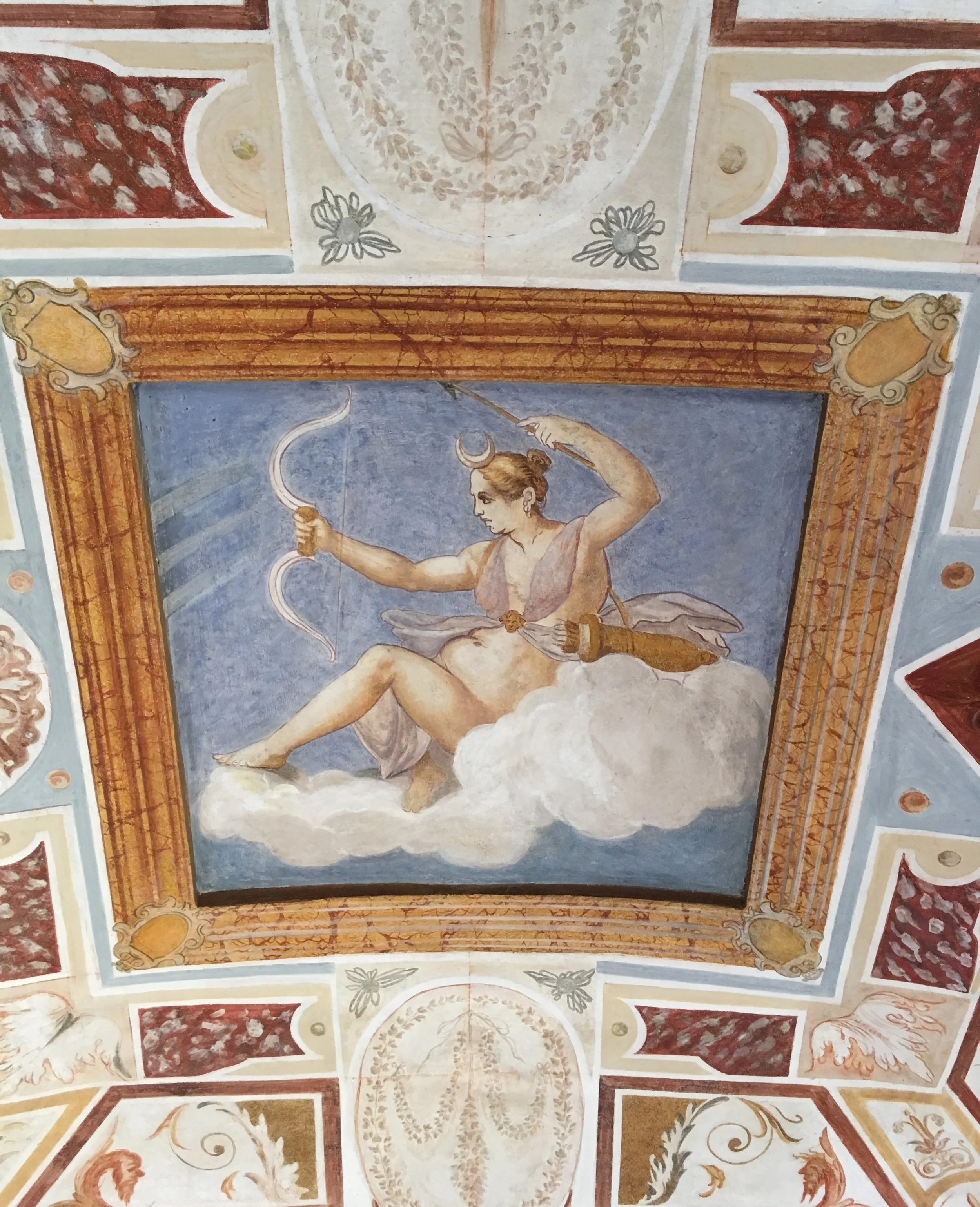
photo©Erin Johnson the Roman goddess Diana
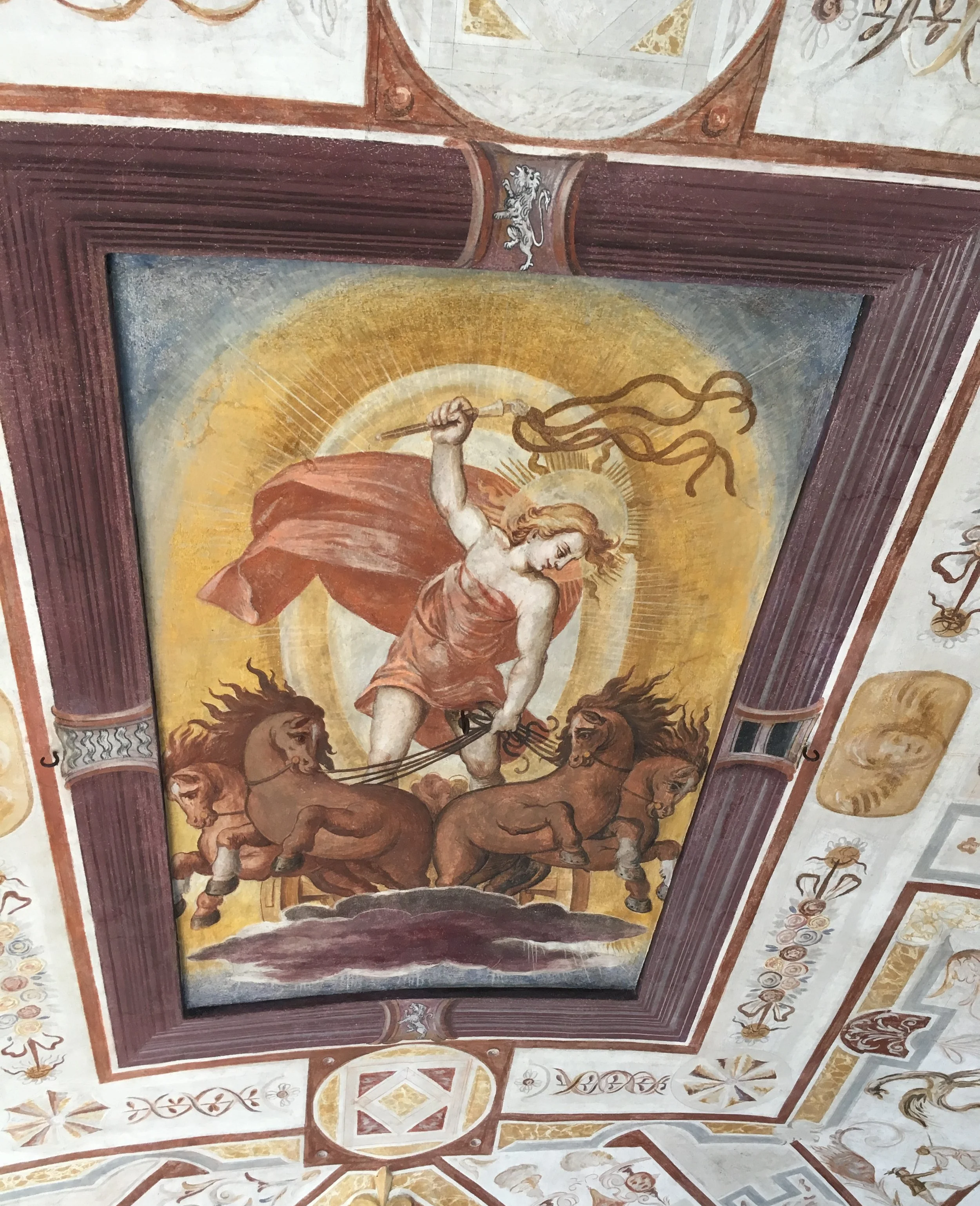
photo©Erin Johnson the Roman god Apollo
Time Keepers
The other evening inspiration visited. Confusion transmuting to realized clarity all while sitting on the front porch. As is often the case, there seemed to be no words that could adequately describe the sensation. Instead, in line with inspiration's etymological roots, it was a moment of being with spirit. It was sensual, faint yet present. It came in a flash and was then gone—a phantom feeling. I’d been wondering, how does this thing called time work when everything I see is seemingly moving in a different rhythm?
The mulberry tree planted to the southwest of my home, maybe only thirty years old, is growing, slowly and steadily with each season. As an antennae for oxygen, a respite for doves, an overstory for all that is below its movement goes practically unnoticed, yet larger and altered with every season. Its very presence, a close sentinel I interact with daily, shapes its own time. But it shares its time with me.
They have sensed millions of sunrises
And then there are all the other forests further away. The giant redwoods crawling from the San Francisco Bay northward, or the equally jaw dropping great live oaks which lace the coastal south. These beings are immense and so is their rhythm of time. They have sensed millions of sunrises. There are the clouds which have their own dance ushered and formed by wind and moisture. The bearded iris and scrub rose swollen with heavy buds, ready to bloom, also have their own internal cadence to which they align. However different they are, I’m sure the conversations are generous and happening interdependently, perhaps even being triggered by similar pheromones, spores, cosmic spin, temperature, or any other number of things I’m unaware of.
The dance of Kairos and Chronos time
Now, if time is movement and everything around me is moving at its own rate and rhythm, yet interconnected, it’s wildly preposterous, practically absurd, that I put any limitations of control in place. For example, why do I place such importance on the fact that it’s 7:43 in the evening, when in fact, it’s not a fact at all. Time is irrelevant. Well, not really. But one thing is certain, it’s not linear. How can it be?
I picture it as a wild, undulating cosmic game of cat's cradle but on a magnanimous layered scale. Or like the sculptural forms of the Oakland, California-based artist duo HYBYCOZO only they are moving, expanding, or shrinking. (Christopher Nolan’s Interstellar was on to something). Rather than being hollow they are full of invisible magnetic threads which keep it together. With this in mind, it is no wonder that sacred geometry comes to life through artistic expression from people all over the Earth and from all times in history. The great Indian poet Rabindranath Tagore said, artistic creativity comes from a deep communion with the Divine presence in nature. Maybe then time is source energy—consciousness.
How and why does something so malleable and amorphous, stand at such a contrast with the attempts by which it is desperately controlled. My intent while taking in the sunset was nothing more than noticing the magic, be it obvious or subtle. Paying attention so that my eyes may capture how the light and energy articulates in material form.
An interwoven web
Everything is relating to everything else. And likely why I’ve had this one line on mental repeat—everything that is happening is touching us, everything—everything that is happening is touching us. I could continue to list everything that caught my eye that evening, from my cats, to the swallows, to the parked car, to the sun setting. Everything is moving in a frequency all its own. I’m living in a space of aliveness, where even one moment can express itself in a thousand and one ways. It’s spectacular. And beyond what we can easily conceive or want to.
“To be slow is not merely to decrease the pace of life. It’s about taking the time to reconsider our actions and things more deeply and responsibly about how we live.”- Carl Honoré
What would it be like to experience slowness without the parameters of time? Is it possible? Conceptually and literally its meaning is informed by movement. Slow is to be sluggish. Slow is to be inactive by nature. To be slow is a calculated act, a return to prescience, an act of rebellion to an otherwise maelstrom of hyperactivity. May I move slowly like molasses. However, can you imagine or experience slowness without considering time? I’d like to think so. Regardless of how meaning and association are deeply wrapped inside the architecture of words, language itself poses limitations.
Cognitive Linguist Lera Boroditsky describes the nuances of language, the particularity of words, the interpretation and their meaning and how it informs everything—how we think and ultimately experience time, space, and place. For those with synesthesia I cannot begin to imagine the prismatic multiplicity this adds. What we think and ultimately what we say to ourselves (and others) shapes reality. Language hangs onto time like clothes drape the body. What we know is merely limited by what we recognize.
She ends her talk (one I highly recommend watching when you are finished reading this) by asking us, the listener, to consider…"Why do I think the way that I do?" "How could I think differently?" And, "What thoughts do I wish to create?" Slowness to me is a kind of language unbound and a subject I find fascinating. What if slowness is irrelevant of time and space? What if slowness is not etymologically confined as being inactive by nature, but instead being fully and sensorially present to the layers of language in our lives?
This is what Micah and I talked about in our conversation about slowing down and rewilding time. Rewilding time is about getting back into the spiral….time is about aliveness. Expressed another way, time is the ability to sit within the full expression of human emotion.
Time is about relationships. The sun to the landscape. The wind through the mulberry leaves. The shifting shadows. The coolness of sorrow followed by the warmth of love.
Going back to that evening on the porch I settled into being in a sea of time, where a thousand and one things moved in harmonic unison. As the evening moved further into itself, the bands of clouds became a deeper, more mellow form of magenta. The combined scents of wood pulp, asphalt, and iris rose and fell upon the currents of wind. My breath pumped through my nostrils, into my lungs and then back out hot and humid. Quiet words were exchanged in the space between Michael and I. It was nice. I felt alive. I felt love.
Yours, Erin
Time is not a measurement but a companion. And I like it slow.