Locating Yourself within the Web of Relationships with Micah Mortali
[Series] On Slow Living #8
December 29, 2024
The earth is spinning steadily on. We have orbited beyond the winter solstice and, for those of us in the northern hemisphere, are now heading into the belly of winter. It’s a lovely time of year when we experience more starlight than sunlight. Shadows are long and the sunsets have a saturated radiance. The warmth of the fire and the gentle glow of candles bring comfort and illumination to a heavy night and dark dawn.
Winter, as a gardener, is quite special. I embrace hibernation. I plan, I catalog seeds, I bury the beds underneath a thick layer of leaves and mulch. I don’t necessarily sleep more. Rather find a new kind of wakefulness in the dark. There is still movement and growth and warmth yet it’s all happening far below in the terrestrial realms. I am able to rediscover the energy of cold and the reciprocity within stillness.
Micah Mortali, dear friend, teacher, and guide is a fierce advocate for befriending the seasons, especially winter. I look forward to the rhythms, rituals, and insights he shares for it reminds me to shift my preconceived notions of time. It’s an opportunity to remember, participate, and play when we typically may not. For him rewilding is a way of being and his doorway into living slow. Micah and I met well over a decade ago when he was the Programs Director for the Schools of Yoga and Ayurveda at Kripalu. Now having developed an entire program around rewilding and restoring one’s relationship with the outdoors, he’s championed the School for Mindful Outdoor Leadership. Frankly I think this is the coolest thing ever!
Throughout our conversation a line from The Big Leap by Gay Hendrickskept coming up for me: you’re where time comes from. Now if this is so, you already have it all. You are its origin. So what is slow living then, but an exploration—an exploration of how we can redefine and bend the social and cultural lexicon of time.
Thanks Micah!
Yours Erin
What does slow living mean to you?
It’s a good question. It’s not easy to practice slow living. I don’t find it very easy for myself these days. Especially with a full-time job, school, kids and having to drive everywhere. How does that work? You know, I think human rewilding is how I approach slow living. Yes, that would be the place where it shows up in my life. Part of it is about rewilding time. What does it mean to rewild time as we experience it? This is a subject I’m really interested in.
It reminds me of an experiment I did as part of the preparation and development process for a new online program I’m launching next year. I interviewed about 65 people. Similar to your questions, I asked what was the biggest struggle in their lifestyle, right now. I thought maybe it would be feeling disconnected or wanting more of a sense of aliveness. Every single person said time. Every single one. Time and money. There wasn’t enough. It was the first thing they said. It was eye-opening. Eerie actually. I think part of it is our devices, the technology, which can eat up any open time we have.
So time scarcity really showed itself from that experiment. But also how we think about time. I think we’re trained to think about time as this finite resource. It’s like how we think about money. There’s a scarcity and a competitive mentality around it because I think we often assume time is like an arrow. Linear. One pointed. It has one direction— from the past to the future rather than a spiral.
So rewilding time is about getting back into the spiral. Because, really, our sense of time is about aliveness. The Greeks called it Chronos time and Kairos time. Part of it for me is working with the Celtic wheel of time. The solstice and equinox, for example, can be a starting point. Paying attention to these seasonal points brings about a natural shift, a change.
Experiencing time with our senses and the seasons rather than human-constructed time lends itself to shifting time awareness. In this way we may find footholds to have a relationship with the land. Yes, that’s a way to engage in slow time or slow living.
It may be gardening. For me it’s hunting. In the autumn and winter hunting for me is one of the most profound experiences of slow living. Especially if you bring in a lot of the ancestral skills like fox walking and sit spotting. It’s unlike any other activity. In a way it’s made me feel most human when I’m out in the woods with my bow and arrow, sitting, listening, watching. It’s hours—a whole day. It’s not often where we give ourselves hours, let alone days to observe nature. To sit and sense and be. At least at this time of year, hunting tunes me in.
Candle dipping, cooking, gardening, hiking, camping, and being with my family are also things I prioritize and choose. Even with all the driving today with kids and school, cooking is even challenging. So I know this topic, I'm sure, can seem so inaccessible. It’s not like it’s slow living 100 percent of the time. We have to use our will a little bit to choose to engage in activities that help us expand our experience of the moment.
What's one thing (action, mindset, ritual, habit, etc.) that's essential to maintaining it in your day to day life?
For me it's a constellation of different practices that, with discipline and over time, has helped me create a structure that allows me to sustain and live a life as mindfully as possible. It’s prioritizing the most important things in my life—faith and family.
I pray everyday. I exercise and then it’s all the nature stuff. It’s mindfulness. And I make a point to be present with my family in the evenings and on weekends. Exercise and nature connection are also extremely important and are a part of my daily life and work.
A great analogy I like to think about and which I share in my work is this: Say you have a big jar. First you’d put in the rocks and stones, then you fill in the remaining space with sand. If you were to do it the other way around, the sand would consume the entire space leaving no room for you to include the larger rocks and stones.
How do you ensure that a little bit of wildness and or nature remains close?
I like to be in the right relationship with time. I don’t like to force things. There are times of hyperactivity when something needs to get done. But I’m at the age where sleep, health, and being with my family are essential. And also it’s having faith that the things will happen when it’s time. I know I have the disciple, so it all weaves together.
I’ve just found that the nature connection practices are so helpful. Anything that helps me connect with the earth and my own circadian rhythm is helpful. The wheel of the year, the Ayurvedic practices, sit spots, candle meditation, even simply going to bed when I’m tired. Any way that we can deepen our relationship with the great elements [ether, air, fire, water, earth] is beneficial. Another big one is saying no to the bullshit.
I think it takes a lot of work, soul-searching to find the work or lifestyle that truly resonates with us. I feel very fortunate that I was able to make the transition into the work that I’m doing now. But it’s not easy to do.
At the end of our chat, I asked Micah to tell me a little more about the practice of sit spot. He’d mentioned it a few times and I sensed that there was more there to explore. If Micah and I leave you one thing today, may it be this.
Most people aren’t looking for the meaning of life, they are looking for an experience that make them feel alive. — Joseph Campbell
SIT SPOT
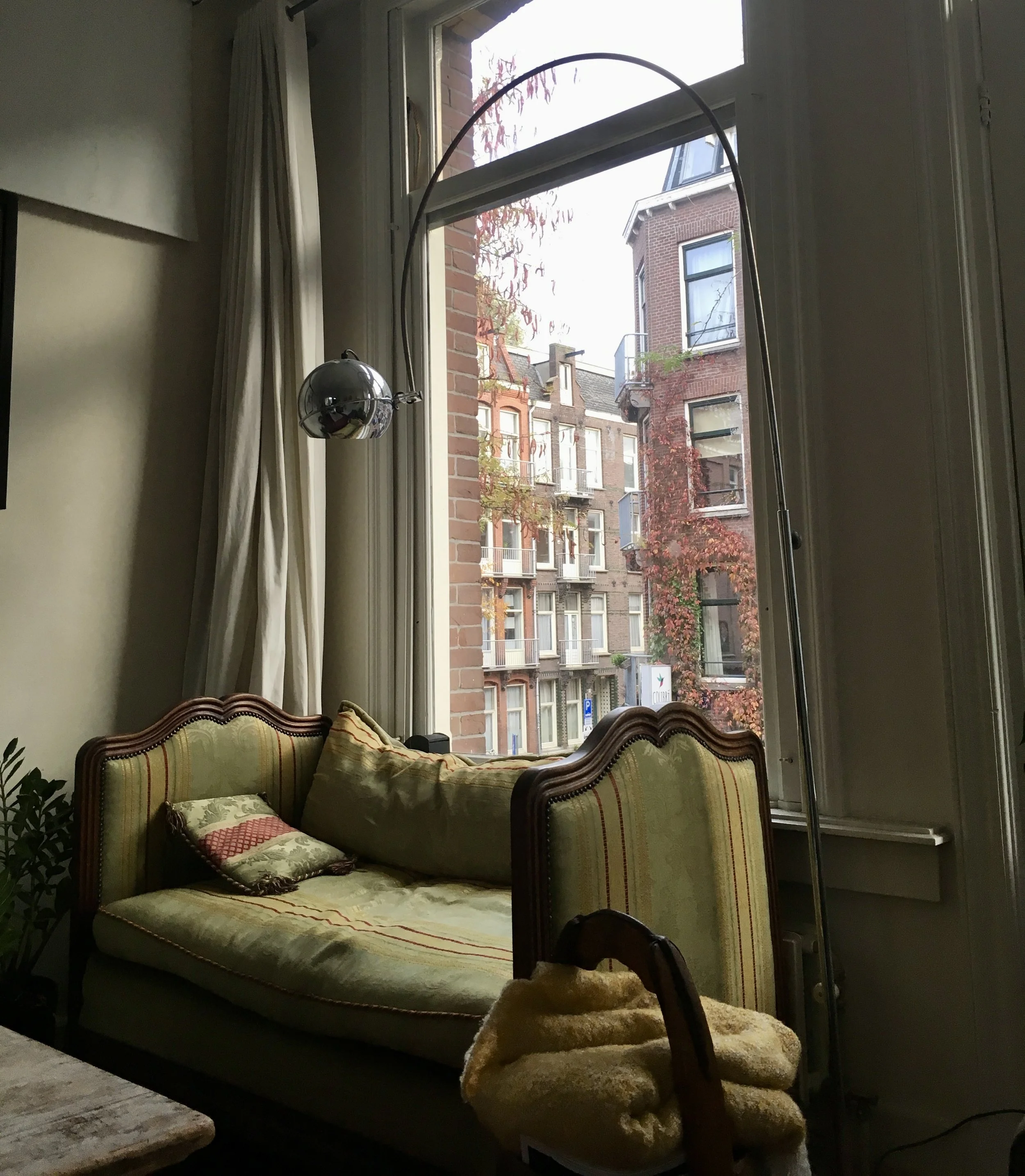
Having a sit spot is a very simple practice—one of mindfulness and connecting with the energy of the earth. You find a spot close to your home. It’s really accessible. You want to be able to get there quickly. The point is to sit frequently, everyday or a few days a week. It may be right outside your door, in your garden, at a park nearby, on the fire escape, or even by a window.
Sit for 15-30 minutes. All you do is keep your eyes open and observe what’s happening. That’s it. You open your senses. You become more intimate with that place. The birds, the clouds, the trees. You're locating yourself within the web of relationships that you’re enmeshed in and you start forming little threads with all the beings around you. The rustle of the wind through or around things, the leaves falling, the sounds of trees, the sunlight and shadows cast. The beauty of it is that many of us often think we have to go somewhere to have a nature connection. Good news is, you’re on earth already. 🙂 Take the time to be a human being. The practice slows you down.
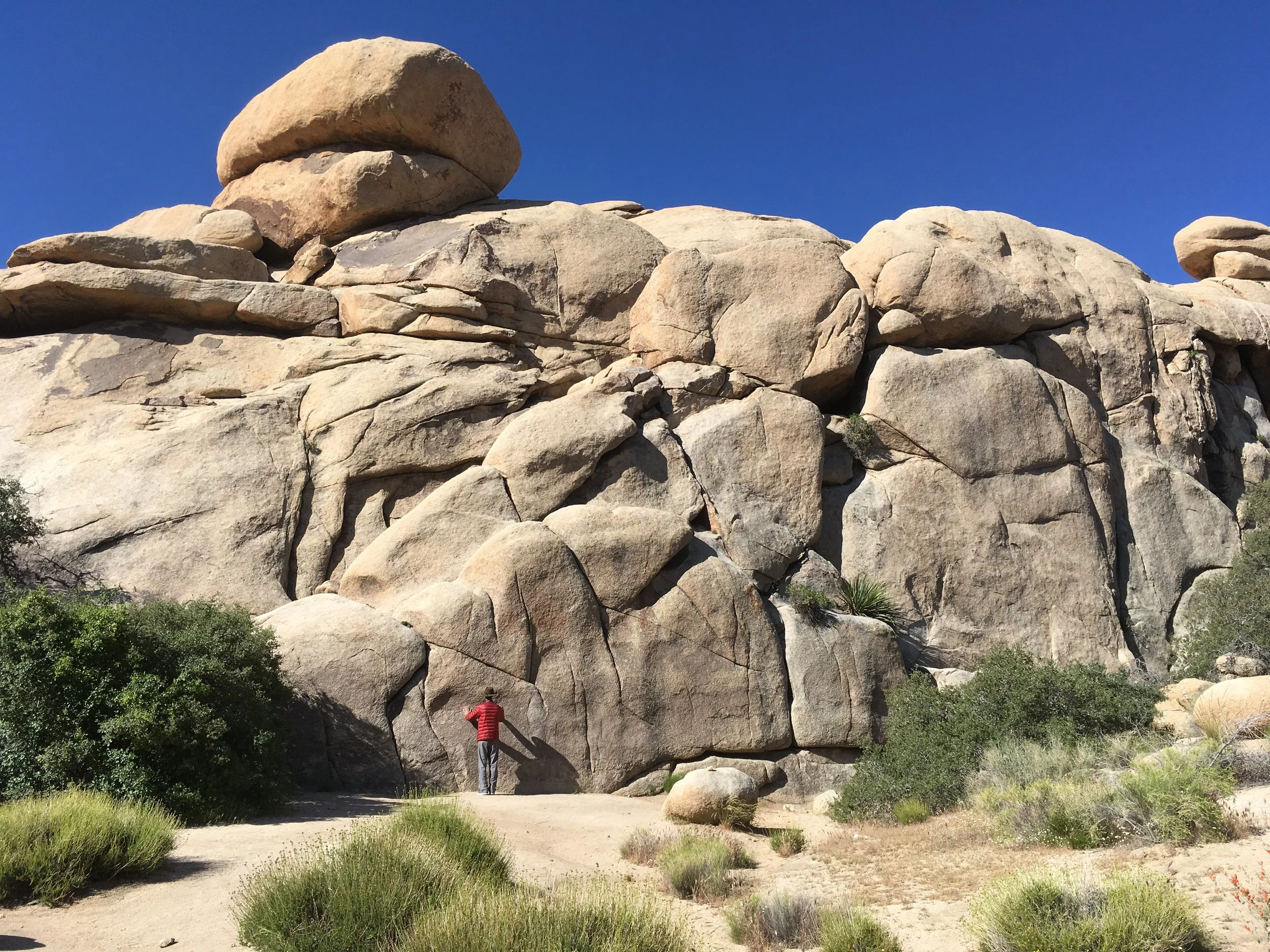
By having a sit spot, inevitably there is a perspective shift of having contact with the natural world. Humans are rather self-absorbed—in denial of our very impermanence. But when you’re outside and you touch a 500 million year old rock, your existence is so tiny. It’s very good for us to get that reality check.
Micah’s amazing. He is launching an online program in 2025 all about rewilding. He also teaches regularly at Kripalu in western MASS.