
Seasonless fruit
a phenomena eroding more than just appetite and palate
January 12, 2025
Location: Albuquerque, New Mexico
Season: Winter
As some of you know I live in the high desert—elevation 5,000 feet. From this place the surrounding mountains and mesa ascend even higher. It has been unseasonably warm. A phrase I find myself saying more and more regardless of the season. To the point where it has lost any kind of impact or shock. However the night and dawn temperature still plummet, making an abundantly verdant garden invisible and icy. The days are hovering between 40-50F (7-11C) and the nights easily dip below freezing. The season has not interrupted my dawn ritual of slipping outside. My body shivers, my face chills, I quickly wake up.
Rainfall is rare—bone dry. It’s a complete contrast from the Pacific Northwest where I used to live. The season is saturated. Rainfall is relentless. But here the land is arid, cold, brown, everything seemingly desiccated and hiding out till late February.This is the landscape of the season, which I share only to give context. If any fruits or vegetables were grown, they’ve since been harvested and put up. Actively growing, right now, could continue if one had ample resources, a heated and well-maintained greenhouse and flowing unfrozen water. Regulating the temperature extremes and water would be the prime focus.
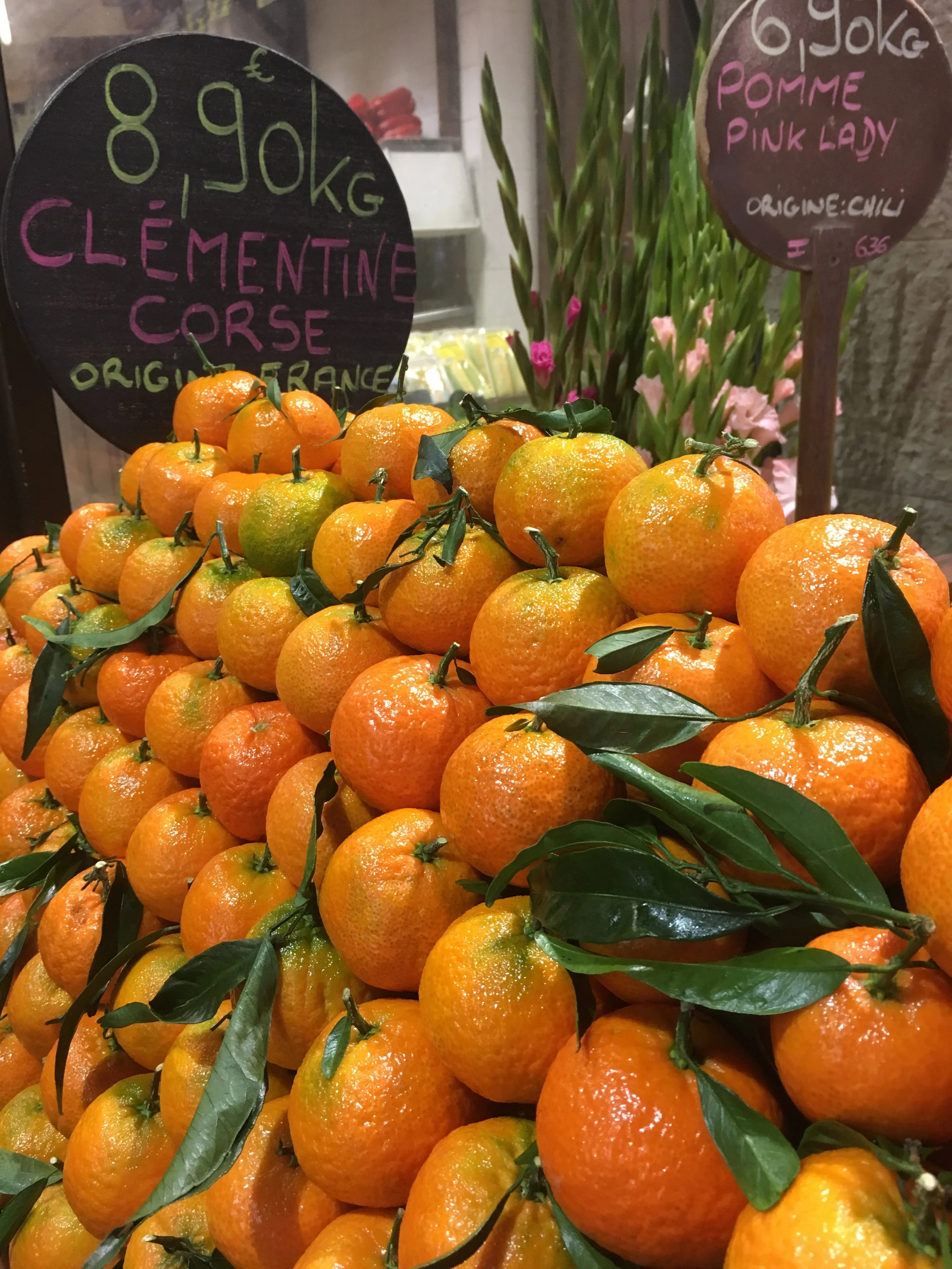
This being the case, I find it off putting when I go to the market to buy produce. What is meticulously piled in front of me is the same seasonless sea that existed 4 to 6 months ago. Nothing has changed. Sunflowers, tulips, and strawberries are just as available in December and January as they are in June. Food, especially fresh fruits and vegetables become extracted and disassociated from the land in which they are grown. Luckily some things still seem to be seasonal. The Persimmon. The Pomegranate. The Nectarine. Yet even with these, their season seems to be stretching. Melons and raspberries seem completely out of place. But they are there.
“Yuzu, a yellow-green Japanese citrus fruit the size and shape of a clementine, cannot be found in the same seasonless grocery store stack of lemons and limes, the fruits we reach for year-round to add a quick hit of acidity to our cooking.” ~ Kate Lebo
My point in sharing this is not to boycott your local produce department demanding better education or showcasing what’s truly in season so that we can have a culinary experience that is somewhat in sync. (You can if you like and it would be great if they did that.) My point is rather about considering its effect. Where are things coming from? What does ‘in-season’ really mean based on where you live? What are the repercussions of eating a seasonless diet? How can seeking out the tender, the precious, or the perishable local delicacies expand your sense of time and place? You may dig bell peppers and cucumber year round because it’s just what you’re familiar with, but where are they coming from?
In Ayurveda the senses are considered powerful antennae. They are openings to the heart and ultimately our spirit. They animate the otherwise inert physicalness of being human. Imagine if one sense if not all succumb to atrophy? I’m afraid our sense of taste has dulled. We’ve lost familiarity with times of presence followed by absence.
This seasonless food landscape is only on of many contributing factors to the systemic disease of disassociation. Unless one actively seeks it out, grows up in the proximity of a garden, or is emboldened in a community that values local food diversity, this knowledge, appreciation, and advocacy for its endurance erodes. One can slowly lose a sense of wonder, resilience, patience, nature connection, and seasonal food recognition.
The irony is that even through there are mountains of fresh fruit and vegetables year round they are the same. The market has become diluted, and as a result, so has our palate. Choice is reduced to 3 types of onions, 2 types of oranges, 3 types of potato, 1 type of avocado, and 2 types of pear. It goes on. Open any seed catalog and you’ll see what seems like a hundred varieties of potatoes. They exist. We just don’t see it, nor are we able to cook with it. Supplying a steady stream of the ‘same’ produce is a recent phenomenon in the USA—the rise began in the later half of the twentieth century. Singularity demands mass production, which likely coincided with the demise of the small family farm or garden where heirloom varieties thrived.
In contrast, mass production often lacks in flavor complexity. They are bred to travel well and withstand long periods of shuffle, handling, and distribution. So, have tomatoes become tennis balls? Making volume, bottom line, unlimited stock, and durability the qualifiers? God forbid we only have tomatoes for a few months out of the year. Have we lost our trust that they will return?
When specific fruits or vegetables vanish or become inaccessible, so do the recipes and food memories they support. For example, certain varieties of fruit and vegetables can have a particular way in which they are approached, prepared, and served. As someone who loves to cook as much as eat, the very existence of different varieties makes cooking interesting, dynamic, and regionally distinct. Our food and the nature of cooking it is what makes us human. There is so much this earth has to offer!
—
I don’t know what seasonless sameness exactly does to our psyche, but I don’t think it’s good. It wouldn’t surprise me if this groove of monotony contributes to collective malaise, overwhelming fatigue, and a general fear of change or decay or transmutation of any kind. How can we possibly conceive of change if nothing around us does? Stare at a white wall long enough and the ability to focus and discern, to be aware and alert, aka pay attention, disappears.
I’m terrified of becoming intolerant of inconvenience. My response is often to go without, to experience eating the food that I grow when it happens to be ripe and ready, to explore new flavors and ingredients, and to advocate for small-scale garden experimentation. I do this so that when the time comes to sink my teeth into a watermelon or have to slurp the juicy flesh of a plum or make marmelo (quince paste), something deep within me remembers—an ancestral memory of where I've been, who I’m becoming, and the land upon which I walk.
Yours Erin