Made by Place and Time with João Rodrigues
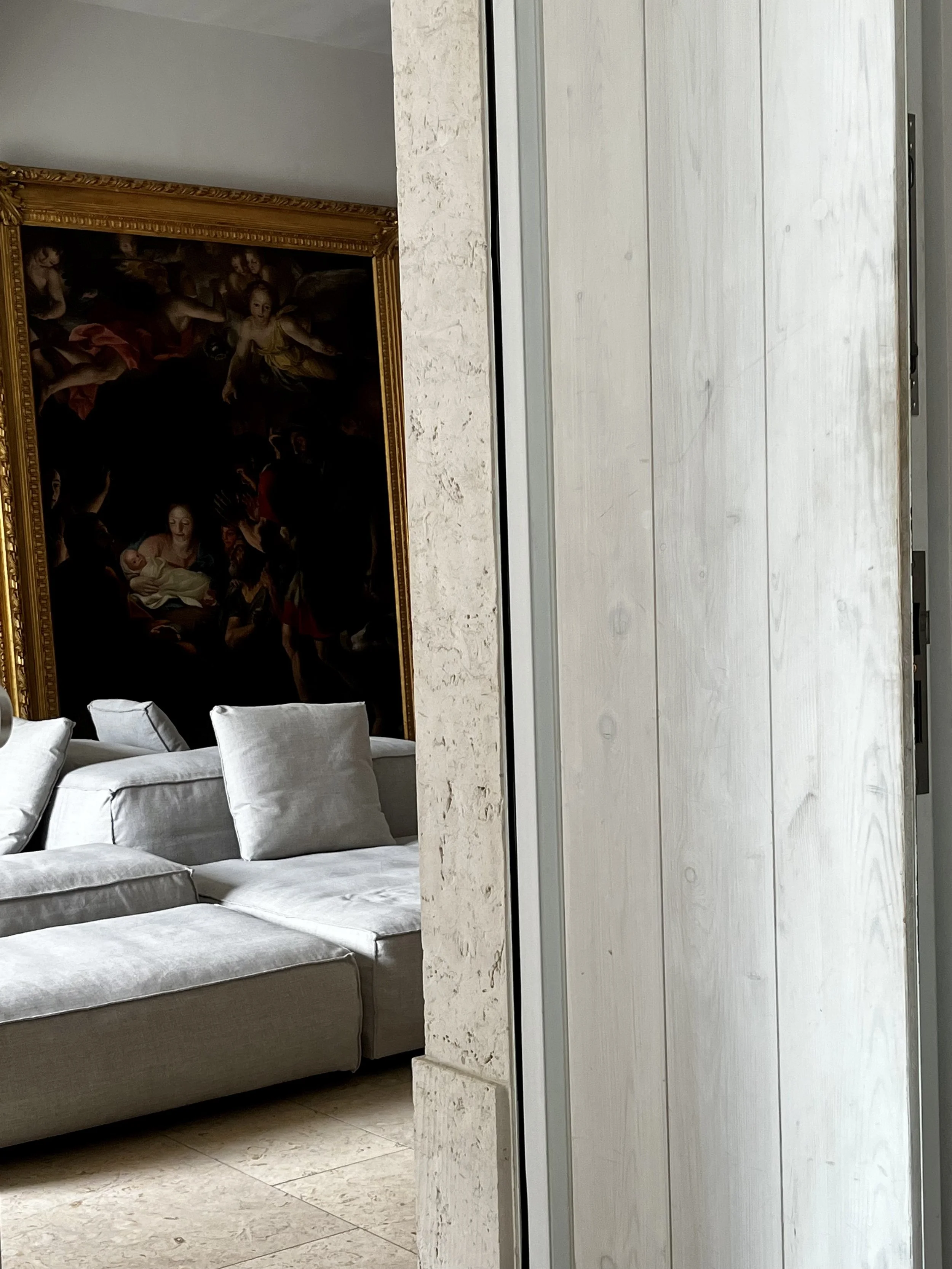
photo © Erin Johnson the lovely Santa Clara
[Series] On Slow Living #5
December 1, 2024
I still have the magazine. 2018 Condé Nast Traveler: The Hot List. It’s worn. The spine torn. Multiple pages are dogeared so that in the event an opportunity arises, I know exactly where I’m headed. I was at my sister’s house rummaging through the stacks of magazines she had piled under her living room coffee table. I found two that looked interesting. After flipping through both, I asked if I could take them home.
She and I both have a thing for world travel. It’s borderline insatiable. I believe it was something already deeply seeded within our nature, even before we flung the overstuffed packs on our backs. In the late 90s, for close to 5 weeks she and I made our way around western Europe.
Walking the streets, for real, always trumps 2D high gloss images. The pictures can breed imaginative fantasies. It’s a tease. Yet other times they foreshadow a truth not yet crystalized – granting exposure in order to earnestly familiarize yourself with something new. The Hot List listed 102 places to stay around the world. Places where they slept (and where we should too.) There was one short blurb on Silent Living. Just to the right there was a picture of the exquisite dining room at Santa Clara 1728. Santa Clara is a small boutique hotel in the old Alfama quarter of Lisboa. They have a few others, all of which originated as family homes and are within a short drive of the capital.
Now, I’m a firm believer that we all carry a compass. The instrument can take many forms, most of which I’ve found are not hand held with a dial calibrated to North. It may take any number of forms, but it taps into the same magnetic source which points us in a direction. The direction we must follow.
It was years later that I reached out to them. I literally sent the team an email. A simple honest note conveying how much I resonated with their ethos, how they defined hospitality, how cool the farm was, and their approach to design and architecture. Each space they created, in which travelers could rest, gather, and find peace, had such a distinct connection to land, family, place, and memory. I didn’t expect anything in return but weeks later I received a heartfelt reply. And shortly thereafter, ended up working with them on a copy editing project. That one project turned into another where I was invited to visit them in Portugal. The experience was wonderfully kind, richly textured, and kindled a deep knowing of my Portuguese heritage. I await my return.
João and the team at Silent Living, as well as the architect and designers, have created something truly special. With an acute eye for detail, they know how to marry form, intimacy, and sensorial ease with absolute beauty. The residences are places you want to be: welcoming and nourishing and a true embodiment of home.
I reached out to João and asked if he would share a few thoughts on what slow living means to him.
Thanks João,
Yours Erin
What does slow living mean to you?
It's a way of living, in which our happiness comes from making others happy. In Portugal we have this concept, especially in older families, when someone comes to your house for the first time, you show them to all of the house — which, I know, is really strange! I have studied and done my training to become a pilot in Scotland and I have English friends — I have known them for 20 odd years — and always, when I go to their house, we either stay in the dining room or in the living room. Sometimes when I want to take my plate to the kitchen, they will say to me, “Oh, no, João, please! We do it.”
While in Portugal, when you come to someone’s house, whether you stay for the night or even just visit for dinner or a coffee, people will show you everything! They will guide you through the whole house: “And here is the kitchen, and here…” — they open up the cupboards and they show you what they have inside — “then here is the fridge, if you want something just help yourself.” Then they go into their rooms and bathrooms, they show you the view from the bathrooms, and the balcony, and it’s a guided tour to all of the house!
One day I tried to understand why they do this. Why do we, Portuguese, do this in our culture? I realized it is to make people feel at home. You want to show your friends how you live and to share this with them. You don’t want to hide anything from them. It’s this idea that whatever is mine is yours as well. If you feel like opening up another bottle of wine, you know where it is, you go to the fridge and you open it.
So all these little things should make you feel well because they are a part of your long-term memory.
What's one thing (action, mindset, ritual, habit, etc.) that's essential to maintaining it in your day to day life?
Empathy…...Kindness. My great-grandmother’s family had a big house in the center of the village. She had ten children and she would open up the ground floor of their house to welcome anyone who was passing by, to stay, who was in need. In those days, people would walk for three, four, five days from one place to the other. She would look after them and their wounds, and all the people who worked with her in the big house would cook for these visitors as well. Then, they would be on their way.
This is, in fact, hospitality. I think people forget that hospitality comes from the word “hospital.” You welcome people in need, you look after them, and whenever they are better they will continue to follow their way. This notion of deeply and genuinely caring for others is how I live in this way.
We [at Silent Living] are not doing anything new, I don’t want to invent anything. All I am doing is: Let’s do it right. It’s these very tiny interactions between choosing the place, designing the house, choosing the materials, and looking after people that makes it magical. Makes it special.
Also there is rhythm in life. When I talk about routines, I talk about stretching yourself in bed when you wake up, opening the windows and letting the fresh air come in, pulling the bed sheets back, seeing yourself for the first time in the mirror that day. Leaving your room to the smell of breakfast being prepared, coming down and sitting at this long, communal table and sharing breakfast with other people — and really spending an hour at breakfast, instead of 15 minutes grabbing somethings and just walking out.
I feel that everything we do should be done with a compass. There should be a rhythm to everything. So, if it’s to write a letter, okay, let’s give them the most beautiful desk, the most beautiful paper, a really nice pen with which they will like to write, and the correct light. Let’s work on it. If it’s about breakfast, let’s work on the breakfast. If it’s going into the garden, let’s make it special as well. All things, everything. Giving attention to these small details.
Love and happiness come from completing little tasks very well. If you do this, you will feel happy on your own. You are the sunshine! And you don’t need anyone else to tell you.
How do you ensure that a little bit of wildness and or nature remains close?
Nature is the background for our lives. I don't consider it as something separate. It’s there always. And not a place I have to go to or that is different from where I am. Yes, there are places in the countryside where nature is more immersive and those places are lovely as well. But I find nature everywhere. I keep these ingredients of living close: Home, Local, Simplicity, Family, Nature, Material, Atmosphere, and most importantly Memory.