
Syntropic Farming Part II — All flourishing is mutual
December 7, 2025
An ode to the changing tides
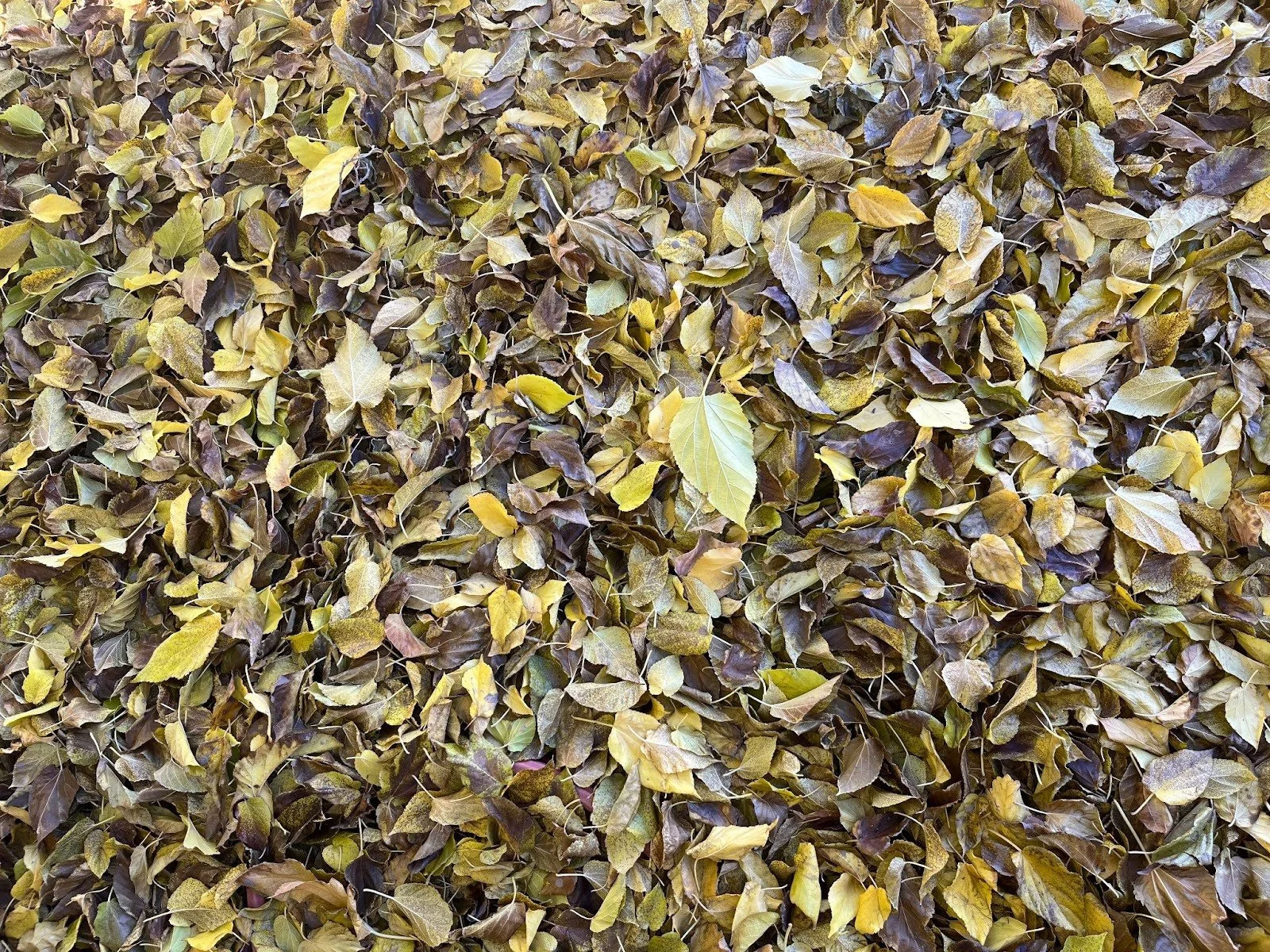
There are some Novembers when the weather turns immediately—at 4:37 in the morning it will take a sharp left. I’ll awaken to a deep carpet of leaves, a perfect circle around the mulberry’s main axis. It’s on these nights that the temperatures will plummet and the irreversible happens. Every single leaf, still green, will be laid to rest. The actual surface of the soil receding underneath layer upon spacious layer of light beings.
The mulberry stands right outside my office window. It’s rustling right now in the afternoon wind. Every autumn is a different conversation. This year it’s a slow and colorful one. I’m relishing the pace at which it’s moving. Rather than a complete and total surrender, the leaves have lingered—a colorful arc, a slow descent. It is taking its sweet time to release each and every leaf. I’ve enjoyed watching them morph from one hue to the next. Each transition, from deep emerald to illuminated lime and then, finally, to the most vibrant canary gold is in concert with its surroundings. Today the rest under an almost full moon and break down underneath a relentless sun. Later those that linger are torn free by the wind. When will the last one fall? I don’t know now, but I will make a mental note of the date, even the time. I like to remember points in its story, when bud breaks or when it’s just an array of branches, for it provides a contextual rhythm, a backdrop. This is life and it is what’s happening.
December 2nd, the last of the leaves have fallen.
The Process of Bedding Down
Presently I’m taking my queue and moving in rhythm with the mulberry. The leaves themselves become a blanket; protective, insulating, and still. They form a notable layer, in a sense allowing the surface to spread and dematerialize becoming greater and more expansive as time passes. It’s a beautiful vision. One that’s quite practical and archetypal. Autuming—a natural process in advance of winter’s rest and decomposition. A point on a moving wheel, out of which life flourishes.
I’m reminded of the syntropic farming principles, specifically the ‘chop and drop’ method, as it’s described. Whatever is cut, pruned, or naturally drops to the Earth is left. We become part of the bio-forestry process. Seasonal mimic makers to encourage and facilitate rapid forest floor growth. In the process of bedding down, I imagine myself as a garden sprite helping build a healing layer upon the ground in order to perpetuate the generation of dynamic living soil.

From this:
To this:
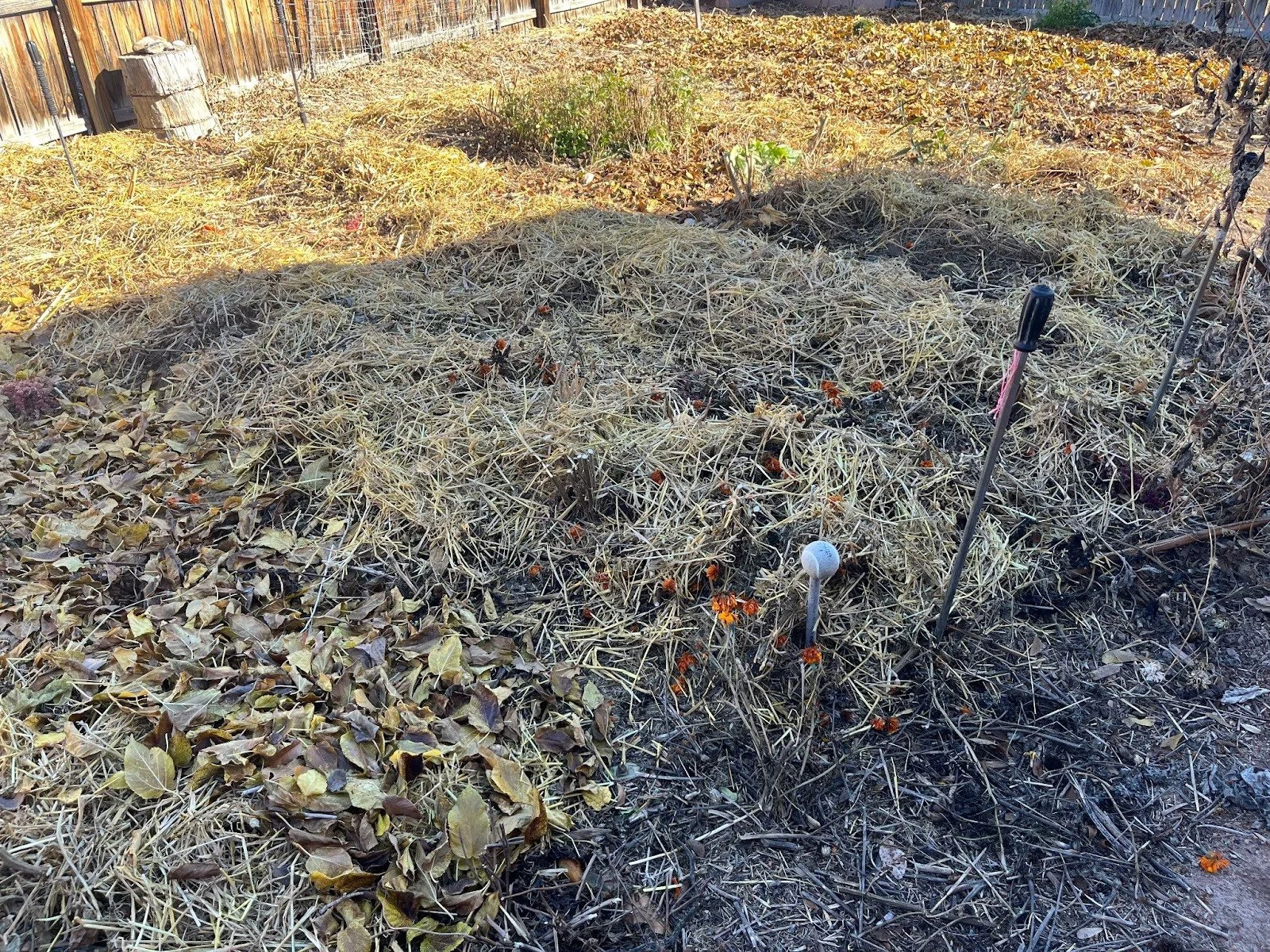
To burial: (a mix of the previous seasons grown, chopped and dropped, upon which there’s a layer of straw and leaves)
A satire directed at the limitations within education. I was reminded of this as I watched the leaves fall. Just as every season presents differently, there must always be an array of diverse and dynamic approaches that are contextually relevant. For example, I thought I was so certain that I’d found the right way to garden, when there is in fact no right way. However, I can say with earnest humility that I’m continually learning and adapting based on the conversations I have with the landscape. What works, what is good or what isn’t. And while my focus has always been with the soil, I’m expanding that attention farther afield. Let’s call it ‘field attention’. It’s where I’m regularly asking myself, how may I be aware of ‘this place’ as a whole—a mutually integrated song rather than one particular instrument. Context, observation, experimentation, and receptivity are essential.

[Barry Linton (1947-2018) - illustrator from Aotearoa/New Zealand]
The folly and the subsequent illusion is when the application of one way or one standard is meant to inhabit a widely diverse set of beings. This form of scaffolding will only hold up for so long until it comes crashing down, exposing its innate brittleness.
The important thing is to be able to live in a place or a situation where you must use your sixth sense all the time. — Michael Ondaatje
So I’m learning a new language and practicing it daily. Gardening practices, principles, and approaches, naturally have to adapt to place. This is why coming upon syntropic farming has been so monumental. Not only did it reveal another way, but the way was a direct response to the contours and expressions of the land itself. It was a harmonic approach rather than operationally driven. I have conversations with this mulberry tree over the course of the year. It’s particularly vivid right now, forming a lovely web of respect and understanding as well as capturing my attention and bringing it out into the field of context.
Your, Erin
Some Updates:
I’m currently in the process of a few things—
Honing in on building a more sane and thriving offline work practice. As you may or may not know I stepped away from social media, (Instagram and Facefook) in April of this year and it was one of the best things I’ve done. Hardly missed.
I’m digging the every other Sunday essay cadence, I hope you are too. As of today, I plan on keeping this schedule but will always keep you posted.
Stay tuned for a website update and clarity on offering overhaul in the new year. I’m excited to share what’s in store.
Have a beautiful day!