
an unconventional aesthetic
October 20, 2024
fragile yet firmly tenacious, for a natural and uncontrollable period, the flower is not the end of what you know, but the beginning of what you don’t expect. ~ Copihue Flower Studio Rome
The dahlia is just one of what seems like the thousands of flowers in the asteraceae family. All varieties of sunflowers, wild and cultivated, cosmos, asters, zinnias, chrysanthemums, and chamomile belong to this family. Similar to its asteraceae cousin, the jerusalem artichoke, the dahlia is able to produce a generous mass-like network of tuberous roots over the summer.
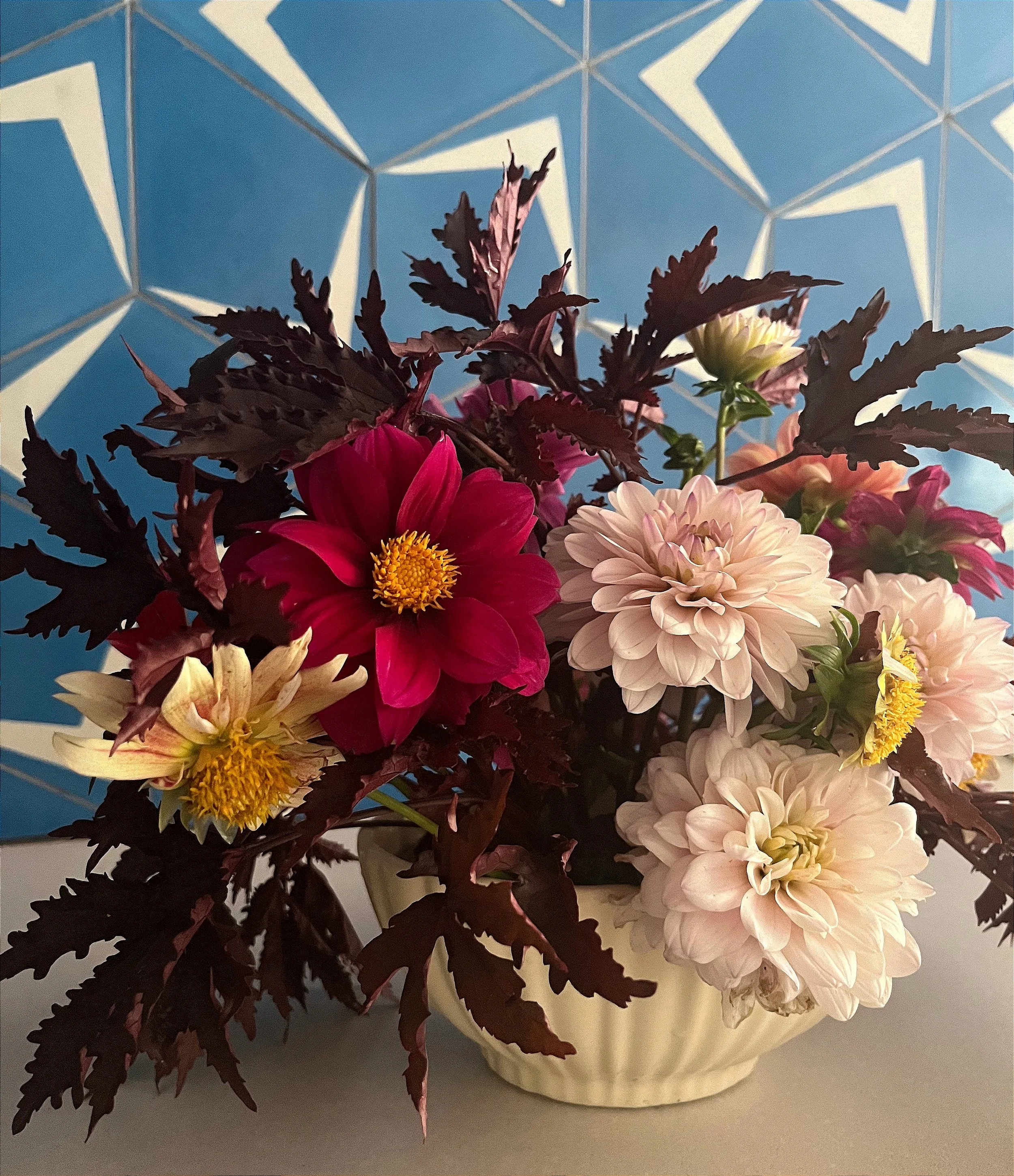
kitchen bouquet
For the first time last year I grew dahlias. I ordered a few tubers online and began the process of what many have said, and I quote, “is an obsession.” I get it now. The plants are stunning and quickly become garden sentinels alongside the sunflower and amaranth. They have this incredible architecture and a fragrance I find incredible, as if celery, anise, grass, and wild fennel were thoughtfully combined. Currently I have some varieties that are as tall as me. Which means, now in October, they have corralled, above all, my attention, but also every bee and beetle in the neighborhood.
Autumn, particularly October, is an incredible time of year. It’s the month where the first inkling of decay is noticeable and the external show of energy retracts in and down. Admittedly I welcome it with an overwhelming sense of relief. I love the pulse and production of summer but I equally love the feeling of fall and its deliberate desire to slow down. The need for sunlight, heat, and water are no longer in high demand. Shorter days and colder nights have affected the relentless push for growth.
Nonetheless, the garden still has a tendency to communicate. Over the course of a single week, sometimes even overnight the change can be dramatic. Dan Pearson puts it rather poetically in his lovely memoir, Natural Selection – A Year in the Garden. “Autumn has a tidal pull that touches everything in its path; it can make you feel very small and insignificant. Best to stand back, not worry about the leaves on the lawn, and just enjoy the moment." I am enjoying it. Yet even with the reduced pace and longer shadows, there is still much to consider. Over these last few days I’ve been eagerly preparing for a different kind of harvest – that of root and seed.
One of the cool things about dahlias is that they can be grown from either tuber or seed. And in either scenario, autumn is the time to take inventory. For starters, I’ve collected the mature and dried flower heads to make sure I have ample dahlia seed for the next couple years. This is seed to plant and share. I’ve also tagged all the dahlia’s whose tubers I want to uproot, divide, and meticulously store in order to plant next spring. I will experiment with some by cutting back the stems and leaving the tubers in the ground covered with a generous layer of mulch/compost. This is a viable option because it does not get wet enough here in the winter for the tubers to completely rot. It does however get cold so I want to make sure they are well insulated.
Dahlia roots, depending on the variety, will look like a dense cluster of small sweet potatoes. I can say from personal experience there’s something so freaking magical and substantial about unearthing roots. It’s such a gift! The same is true for harvesting potatoes, carrots, daikon, ashwagandha, or ginger.
After the harvest, I’ll divide, label, and store them in a cool and dry location. The tuber, when planted out next year will produce an exact clone of itself so make sure you label your tubers well. I’m always improving my systems. It’s an art and process and meant to be fun. You may start with planting one tuber and find that in just one season your one tuber has multiplied to five, maybe more. It’s crazy. It’s nature at its finest, abundantly proliferating.
A flower when pollinated will also produce a plethora of seeds. But unlike the tuber, when you plant dahlias from seed (unless taking the proper measures for flower breeding) it will produce a flower that is totally unique and unlikely to look exactly like the flower you harvested it from. It’s fascinating and a part of the gardening process I absolutely love and am frankly obsessed with – even more than dahlias themselves. Collecting, drying, and saving seed has become, by far, one of my most beloved acts of creativity and stewardship.
Your, Erin
Interested in starting to grow your own flower garden? I highly recommend it. Start by reading Where you can source high quality seeds and bulbs next. Or even schedule a Garden Consultation to talk details.
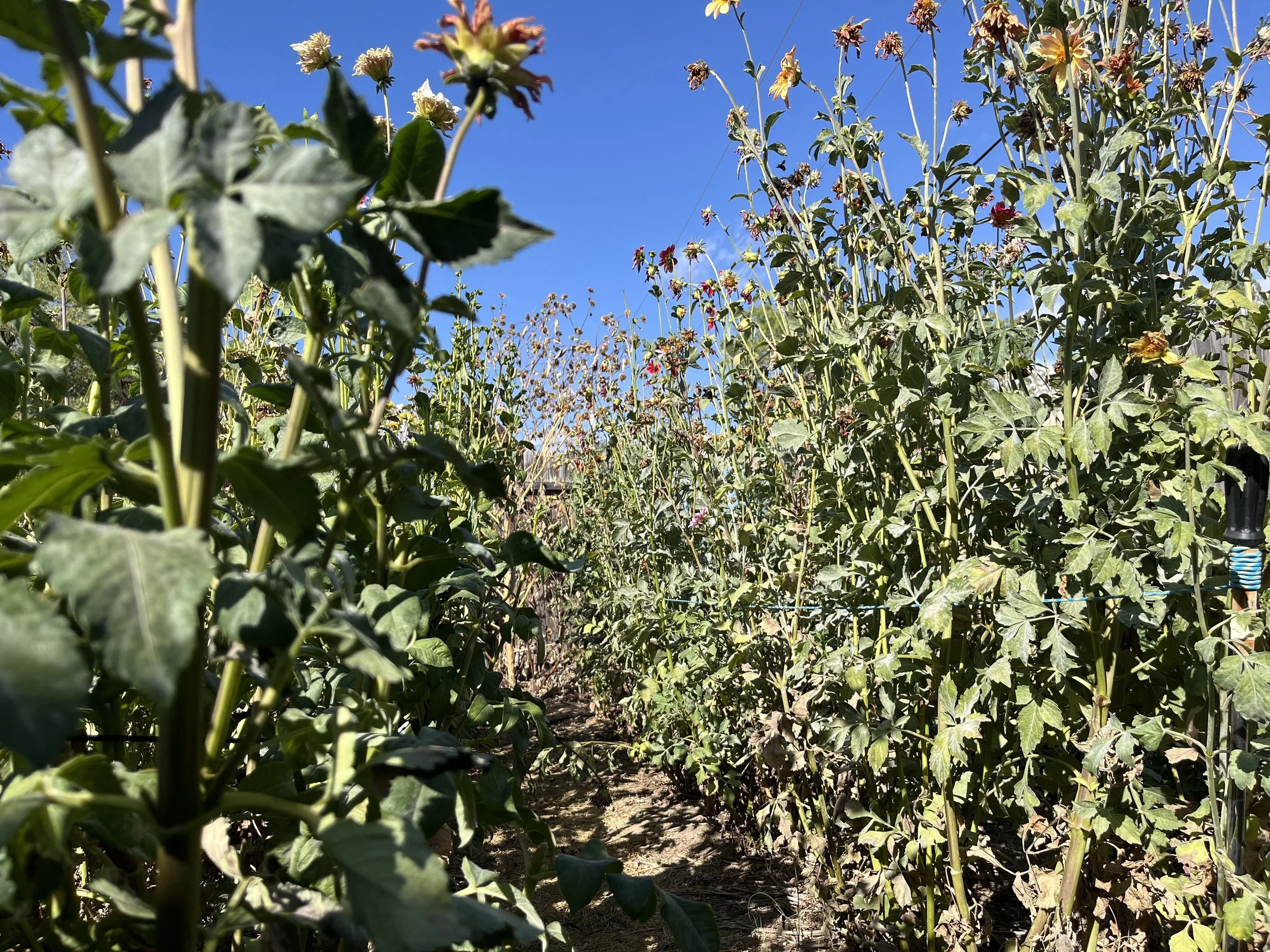
late summer dahlias in my garden