
Veins of gold
Joinery that is precious, sturdy, and illuminating
August 2, 2026
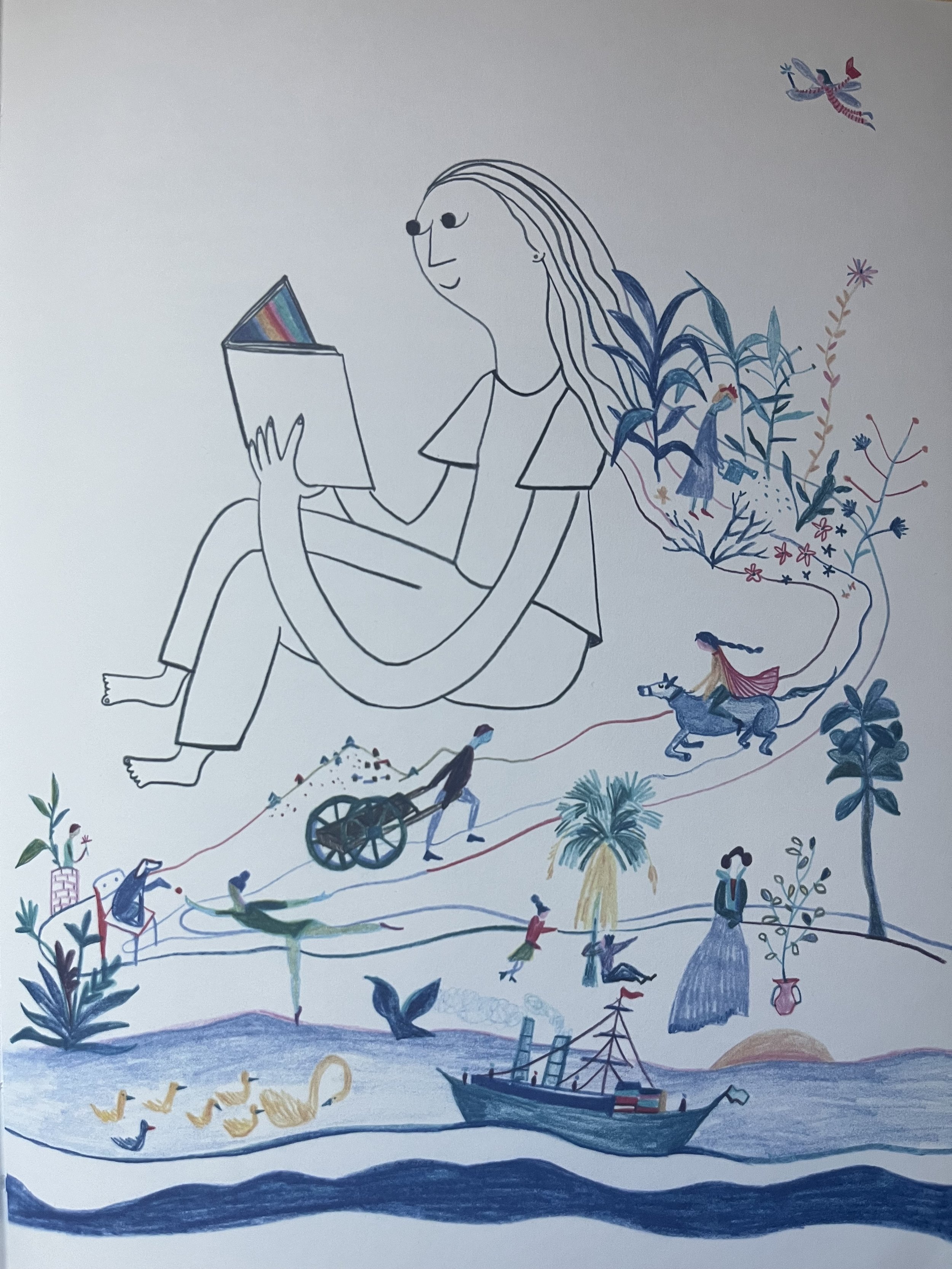
The work I do is solitary, yet, somehow it joins ideas, people, and concepts together like a bridge. I call it being a scribe. One who observes, listens, and records all while seeking to genuinely understand. Luckily, as a scribe, in order to creatively write I actively read and engage with my surroundings with an isn't that interesting versus, that’s not right perspective. Reading other people's words expands my imagination and fuels my inquisitive nature. Writing, its expressive counterpart, is essential for reasons I hope are obvious.
© Sanrda Jávera - https://sandrajavera.com/
“Books let us know we’re not the center of the universe; the universe has many centers,” said Mariahadessa Ekere Tallie.
Now even though I love the vibe—this singular, attentive way of being—I appreciate its seasonality. At times it can be terribly isolating. Most days I tap away on the keys alone. Maybe a cat snoozing nearby. Other days I’ll open my inbox and you’ll have responded to a letter or essay or forwarded something that was meaningful to you. As bizarre as it may sound, I’ll be overjoyed, thinking, you’re actually out there and you’re REAL.
Honestly, it all comes down to connection. And it means the world to me when we do. It’s like that feeling you get after waiting for someone to pick up the phone after listening to it ring 10 times. Finally, contact! Writing alone, even talking into a screen alone can be psychologically and physically hard. When it remains imbalanced or predominately one-way, ghostly illusions play stand in for reality.
Insular seasons call for breaking it up. Literally. I read, write, rip up the floor (we’re currently remodeling my office/studio), or cook a hot lunch. I’m constantly reminding myself to pay attention to the life and world around me. I dial up a close friend, watch the afternoon shadows dance on the studio wall, close the laptop and take a walk, run an errand, be with the people or the plants. I immerse myself. It’s fascinating. There are so many different kinds of stories and countless ways in which they’re told.
Hannah Louise Posten, a voice on YouTube and a published poet, who shares her perspectives on fashion, art, and style talked about this strange sort of disassociation that happens when too much time is spent alone versus in good company.
“There's just something about the vibe of us together. And so then the purchases represent a continuation of life lived in community and lived with people. And it sort of integrates fashion into history and community, which is really how it should be, right? Instead of this kind of isolated, really carefully engineered, and controlled thing, a sort of personal style that you create behind closed doors and then force yourself through,” said Hannah LP.
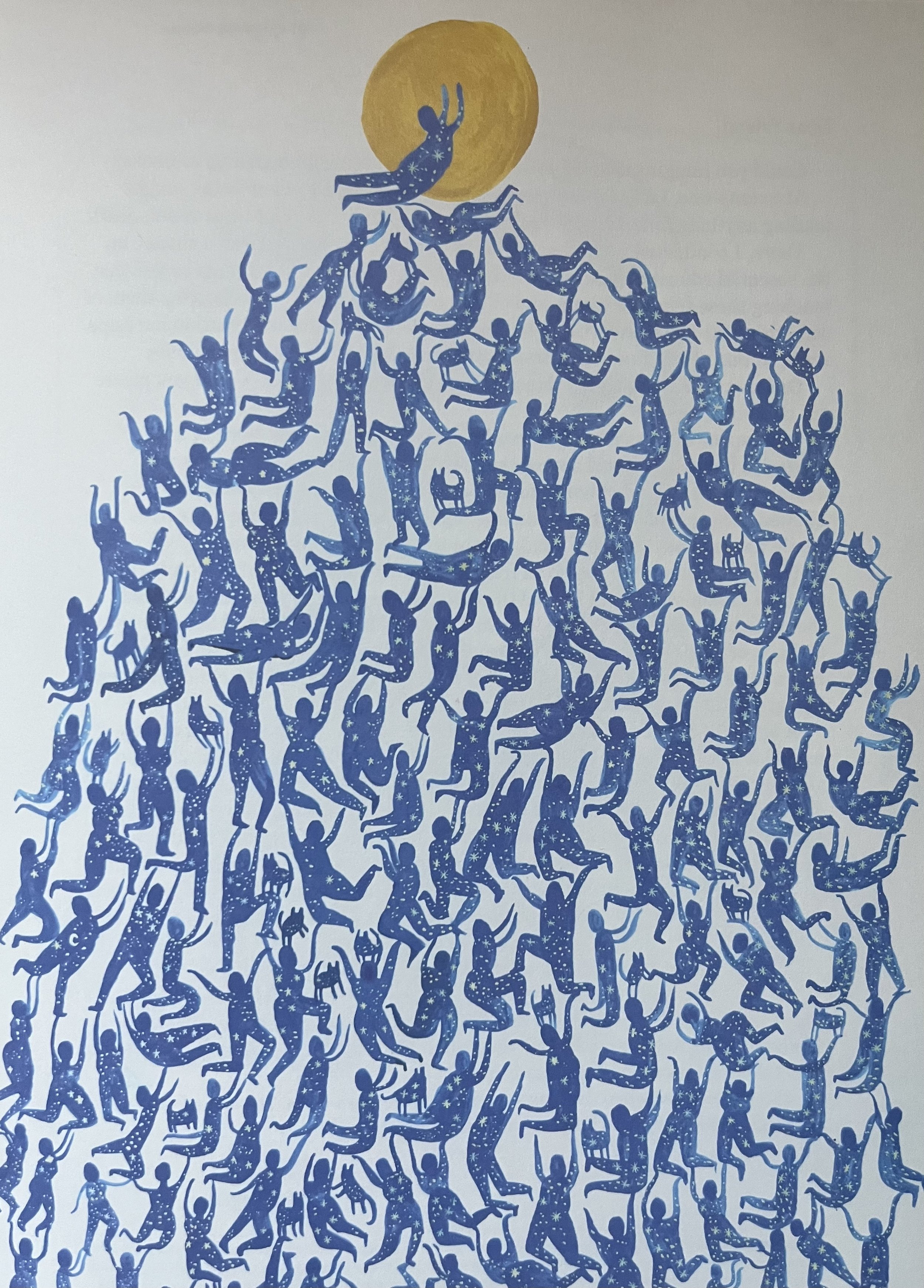
Being in good company has a palpable ripple effect, that much is clear. Whether it’s design, architecture, play, style, dance, food, song, you name it, we are hard-wired for social connection and acceptance. I’d go so far as to say that it is one of the most healing and therapeutic things we can do. Shopping online, which amounts to endless scrolling alone is a very different experience than if out with a friend.
© Esmé Shapiro https://www.esmeshapiroillustration.com/
You may have heard of kintsugi. Kintsugi is the act of joinery. It’s the art of making something whole again; a broken cup, a shattered vessel reconstructed with the use of molten gold. Of all the adhesive-like substances available, Japanese artisans used gold as the glue. It was considered and deliberate. Gold is the metal of the heart. Gold is the alchemist’s beloved. Veins of gold seem to transmute the original into something even more beautiful, textured, and layered. I like to imagine myself as a shard of clay that’s connected to other shards of various shapes, colors, and ages. Together we make one giant vessel that, over time, needs more and more veins of gold to remain intact. When I start looking, I see veins of gold everywhere. They’re like pathways back to a shared watering hole.
In the last couple weeks I’ve received a number of unrelated emails and texts about the Spanish architect Antoni Gaudí. Perhaps it’s due to the fact that this year is the centenary of his death and his infamous Basilica in Barcelona, La Sagrada Família, has resurrected a completed finial on one of its towers. But I also like to think it’s that glue-like gold that’s connecting seemingly unrelated stories in our lives together.
Close to thirty years ago, my sister and I, with Eurail passes in hand and rucksacks on our back, traveled western Europe together. We spent a few glorious days in Barcelona walking the perimeter of the great cathedral, marveling at its grandeur, and casually observing the comings and goings in the shade while reading from a tattered old copy of Sophie’s World. It was said that Gaudí knew this grandiose basilica would never be completed in his lifetime. It wasn’t finished then and it’s not finished now. Instead he planted a seed, loved it hard, and left the rest to imagination, patience, and community skill. It’s become a collage of parts joined together over the decades.
The centennial celebration also included a drone light show illuminating a quote of his in Catalan, “Primer l’amor, després la tècnica” - First love, then technique. And I thought, well, isn’t that interesting, there you have it.
I think gold is a metaphor, symbolizing love. An invisible current which emanates from the heart and informs everything we set out to do, create, or experience is also what joins. Veins of gold, strong enough to hold wildly different shapes together, kintsugi, is the visual reminder that we are a sum of many parts.
In my memory I see my sister and I sitting there for hours that afternoon, tired, curious, wonder-eyed travelers. Both a work in progress. Both conglomerations of stories, temperaments, timelines, and experiences—our own personal la Sagrada Família figuring out the techniques, yet joined, from the beginning, by love.
Embodying that principle, "First love, then technique" is useful not only when designing a cathedral but also when designing your own life.
First love, then the technique of building.
First love, then the technique of teaching.
First love, then the technique of practising yoga.
First love, then the simplest tasks of everyday life: cooking, cleaning, caring for someone, or writing a message.
…perhaps that is where we find our true temple. Not in stone. Not in a tower illuminating a city. But in that inner light, seeking expression through each of our actions,” said Julia Dalalba.
Please keep your notes coming. I read every one, every forwarded essay. May we connect in all possible ways. These are our veins of gold.
Yours, Erin
Images and quote by Mariahadessa Ekere Tallie are from A Velocity of Being, Letters to a Young Reader edited by Maria Popova and Claudia Bedrick. Enchanted Lion Press : New York 2018.